Physical Address
304 North Cardinal St.
Dorchester Center, MA 02124
Physical Address
304 North Cardinal St.
Dorchester Center, MA 02124
On Amy Poehler’s podcast, Billie Eilish said she plans to age naturally and avoid cosmetic surgery, while also recalling she “sobbed” through her only PR training session at 14.
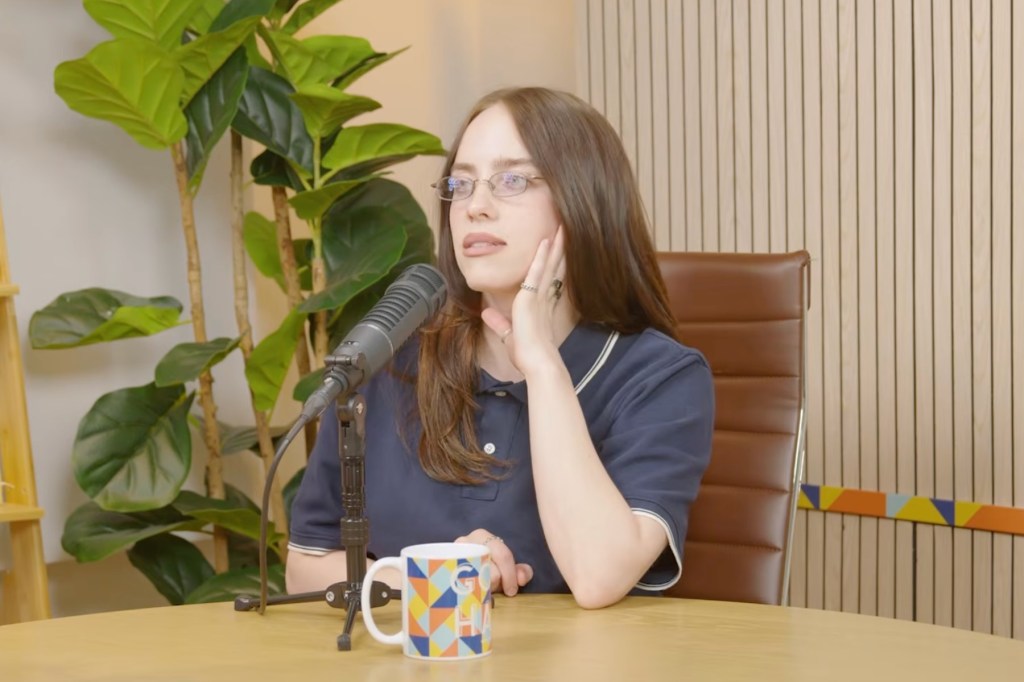
Billie Eilish is once again drawing a line between image culture and personal identity, this time with a clear stance on cosmetic surgery. In a new episode of Good Hang With Amy Poehler, posted Tuesday (May 5), the singer said she has no interest in facelifts or fillers and wants to let her face and body age without intervention.
Speaking about growing older in public, Eilish reflected on how fixed her self-image once felt as a teenager. “I never thought I would not be a teenager,” she told Poehler. “I remember when I was 17, I was like, ‘OK, I am the person I’ll be forever right now.’ And that’s not how it works, obviously.”
Now 23, Eilish framed aging as something she actively looks forward to. “I am so excited to age, and I’m so excited for my face to age and my body to age and not change it,” she said, adding that she wants her future children to see family resemblance in her face rather than what she called “some botched version of whatever the f–k is going on out there right now.”
The comments land at a moment when Eilish remains one of pop’s most closely watched figures, with visibility extending beyond music into fashion, film, and internet discourse. She is preparing to release her 3D Hit Me Hard and Soft concert film on May 8, a project she co-directed with James Cameron. Against that backdrop, her remarks read less like a one-off opinion and more like a continuation of a long-running conversation she has had about beauty standards, transparency, and pressure on young audiences.
Eilish has addressed cosmetic work before. In a 2021 interview with The Guardian, she said, “It’s completely fine to get work done — do this, do that, do what makes you feel happy.” Her critique, then and now, is aimed at denial and the performance of “naturalness” as moral superiority. As she put it at the time: “It’s just when you deny it and say, ‘Oh, I got this all on my own, and if you just tried harder, you could get it.’ That makes me literally furious. It is so bad for young women — and boys, too — to see that.”
Elsewhere in the Poehler conversation, Eilish connected that same value system to media training and public speech. She said she attended one PR training session at 14 and immediately rejected it. “I sobbed through it,” she recalled. “I hated it so much. It was literally the scariest s–t of all time. I only did one session and it was under an hour, and I sobbed, and I left, and I did not follow any of the rules after that.”
For an artist whose career began in adolescence and has unfolded under relentless scrutiny, those two threads, resisting cosmetic conformity and resisting scripted communication, point to the same instinct: control over self-definition. In a pop landscape built on polish, Eilish is arguing for something less seamless and more honest, even when that honesty is uncomfortable.