Physical Address
304 North Cardinal St.
Dorchester Center, MA 02124
Physical Address
304 North Cardinal St.
Dorchester Center, MA 02124
Noah Kahan says post-tour burnout after Stick Season nearly drove him out of music before The Great Divide. His first Billboard 200 No. 1 arrives alongside candid reflections on anxiety, OCD, and the cost of sudden superstardom.
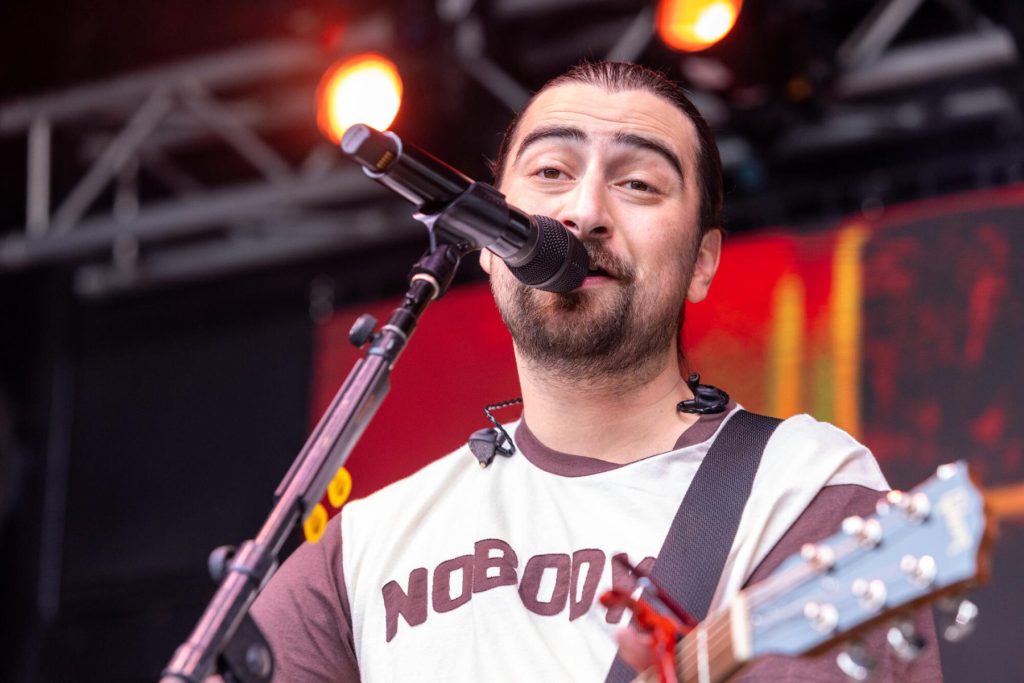
Noah Kahan is speaking candidly about the comedown that followed his rapid rise, revealing that the pressure of success after Stick Season left him seriously considering a life outside music.
In a new Rolling Stone cover story, the Vermont singer-songwriter said the attention that came with becoming a headlining force nearly made him walk away. After years of building an audience in bars and clubs across New England, Kahan’s third album, 2022’s Stick Season, became a long-burning breakout and eventually reached No. 2 on the Billboard 200 in 2024. The leap into arena, and then stadium-level visibility, came with a cost.
“Every cliché about music has proven so true for me,” Kahan said. “Like, ‘You can get everything you want, and it’s still not going to do it!’”
By the time he wrapped the lengthy Stick Season run in September 2024, he said the idea of making another album felt overwhelming. “Right after the tour, I was just sick of it,” he said, describing a job that had become anxiety-inducing rather than rewarding.
He explored alternatives in earnest: community college psychology classes, substitute teaching after getting fingerprinted, even golf course maintenance work. The fantasy, as he framed it, was simple labor and less psychic noise.
That context is key to understanding The Great Divide, which has now delivered Kahan his first No. 1 on the Billboard 200. The album’s opening week moved 389,000 equivalent units in the U.S. (week ending April 30, per Luminate), the largest week for a rock album by units since Billboard adopted the current methodology in late 2014. It also marked the third-biggest opening week of 2026 across all genres.
The streaming numbers were similarly outsized: 215.4 million official on-demand streams in its first week, currently the biggest streaming week for any album this year. That momentum pushed Kahan from No. 24 to No. 1 on the Billboard Artist 100, his first time leading the chart. A total of 21 songs from The Great Divide charted, including 12 in the top 40.
Creative recovery began in late 2024 at Aaron Dessner’s Long Pond studio in upstate New York. Kahan told Dessner he felt burned out and unsure he had anything left to say; within about an hour, he wrote “Porch Light,” one of the album’s emotional anchors. Dessner, who has worked with a wide range of major songwriters, argued that Kahan’s appeal runs deeper than his image as an unassuming everyman: “He’s one of the most brilliant songwriters we have today.”
But the rebound wasn’t linear. In March 2025, after moving to an all-glass Airbnb in Joshua Tree, Kahan said he experienced what he called an “infamous Joshua Tree OCD meltdown.” During a period of intrusive thoughts and isolation, he sought help and was diagnosed with obsessive-compulsive disorder, a diagnosis that he said clarified patterns stretching back to childhood.
That admission matters beyond celebrity confession. In a pop economy that still rewards constant output and omnipresence, Kahan’s account underscores the psychological whiplash between public adoration and private instability. His story is less about a neat redemption arc than about managing chronic mental strain while remaining highly visible.
Now, according to his manager Drew Simmons, Kahan is in the healthiest place he has been, and the success of The Great Divide suggests audiences are meeting him where he is: less polished myth, more complicated person. As Kahan put it, “You find out who you are in the moments when you’re alone… I needed to be brought back down to earth.”
If you or someone you know needs mental health support, text “STRENGTH” to 741-741 to reach a certified Crisis Text Line counselor.