Physical Address
304 North Cardinal St.
Dorchester Center, MA 02124
Physical Address
304 North Cardinal St.
Dorchester Center, MA 02124
Young Thug used an Instagram Story to reflect on the death of Rich Homie Quan, posting archival footage and the terse line 'Never switched on u brada always road with u what happened.' Their split, born from public insults in 2015, reframed both legacies.
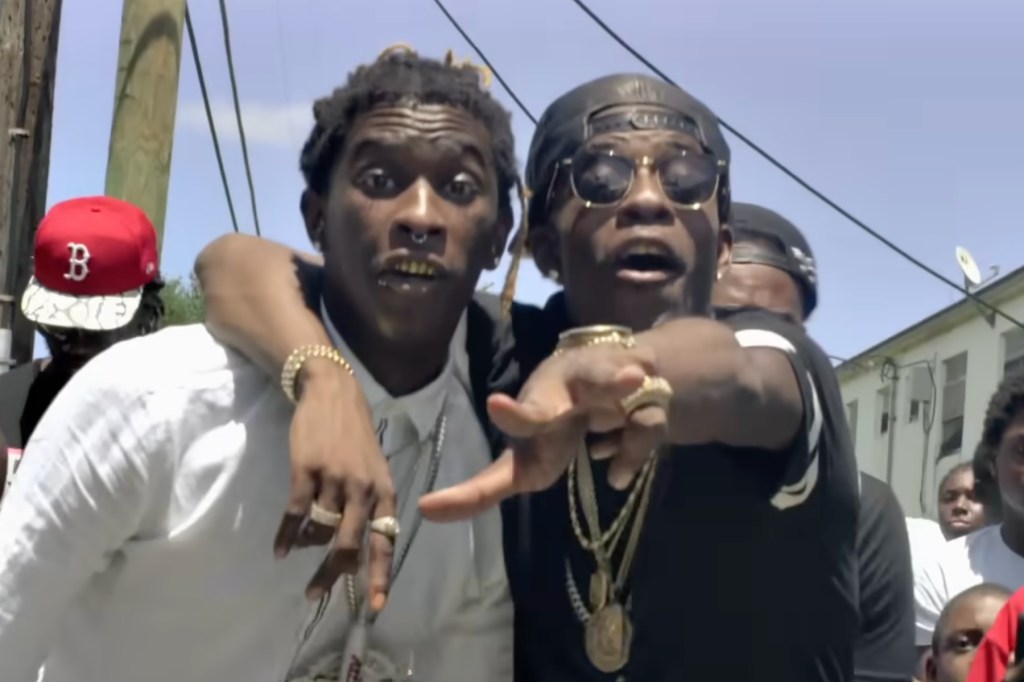
Young Thug posted a quiet, guilty line on his Instagram Story this week and with it reopened a chapter of Atlanta rap that has felt unfinished for nearly a decade. The clip was archival footage of the two trading bars in the early 2010s — a reminder that before headlines and beef they were collaborators who helped rewrite what melody in trap could be. Thug captioned the story:
‘Never switched on u brada always road with u what happened [crying emoji]’
That short, raw caption landed on top of a career that, for both men, never quite followed a straight line. Thug and Rich Homie Quan first shared the spotlight in the mid-2010s, most visibly on projects tied to the Rich Gang era. Their work together — from loose early tapes to the mainstream push that produced the runaway radio hit Lifestyle — helped move Atlanta rap toward a more vulnerable, sing-song cadence. Lifestyle peaked at No. 16 on the Billboard Hot 100 and topped R&B/Hip-Hop Airplay, the sort of crossover success that made the partnership feel like a preview of a sustained dynasty.
Those wins did not translate into a lasting friendship. The relationship fractured in 2015 when, onstage, Young Thug publicly insulted Quan and later yelled against him during a show in Santa Ana, California. The split calcified in public ways: interviews, sly jabs, the absence of joint bills. In a 2017 conversation with WEDR 99 JAMZ, Quan himself tried to downplay bitterness, saying, ‘We don’t got no bad blood, but we don’t talk. We don’t talk every day like you would think we would talk every day. But we don’t got no bad blood. I just leave.’ There was a distance, nonetheless — both men moving forward but not together.
Quan died in September 2024 at 33; the Fulton County Medical Examiner later ruled the death an accidental drug overdose. His passing reframed those old slights. Thug has since admitted regret, telling streamer Adin Ross in October, ‘We don’t speak on the dead. R.I.P. the boy Quan. I wish we could have made amends before he died.’ His new Instagram Story felt like the same sentiment reduced to an image and a few words: remorse in public, and too late.
There is a cultural weight to that missed reconciliation. In the 2010s, Thug and Quan’s chemistry offered a template — the hook-singing rapper and the emotional storyteller — that other Atlanta duos and groups would replicate. Their split helped scatter that blueprint into solo careers that both succeeded and diverged: Thug became an eccentric, genre-bending presence who has since been named among The New York Times’ 30 Greatest Living American Songwriters and returned to massive festival stages like Coachella. Quan carved out his own lane, but without the same prolonged institutional support or consistent mainstream platform.
Watching Thug post the clip, you sense an awareness that public feuds carry private costs. Performative beef can be currency in hip-hop; it can also be a barrier to the kind of closure people need. The Instagram Story was neither an apology extended in depth nor a eulogy that untangles decades of friendship and rivalry — just a small, human admission that he was thinking about something he perhaps should have fixed sooner.
There is a second, quieter story here about how the industry processes loss. Artists are canonized while alive and mythologized when dead; they are also prone to the same missteps and missed conversations as anyone else. The reaction to Thug’s post — a mixture of sympathy, critique, and resigned acceptance — is as much about how social media forces grief into short-form moments as it is about the particulars of their relationship.
In the end, the footage and the caption remind us of two things that are obvious but easy to forget: collaborations can change the shape of a genre, and the people who make those moments are exact, complicated humans. For Thug, the post is a public nudge toward accountability. For fans, it raises the question of what reconciliation looks like when one of the principals can no longer respond. Neither question has a tidy answer.