Physical Address
304 North Cardinal St.
Dorchester Center, MA 02124
Physical Address
304 North Cardinal St.
Dorchester Center, MA 02124
Tori Kelly announced her sixth album, God Must Really Love Me, due June 12, with two singles arriving May 8. Written largely alone after becoming a mother, the record pairs intimate songwriting with collaborators like Nija Charles, DIXSON, Emily Warren, Tommy King and Dan Farber.
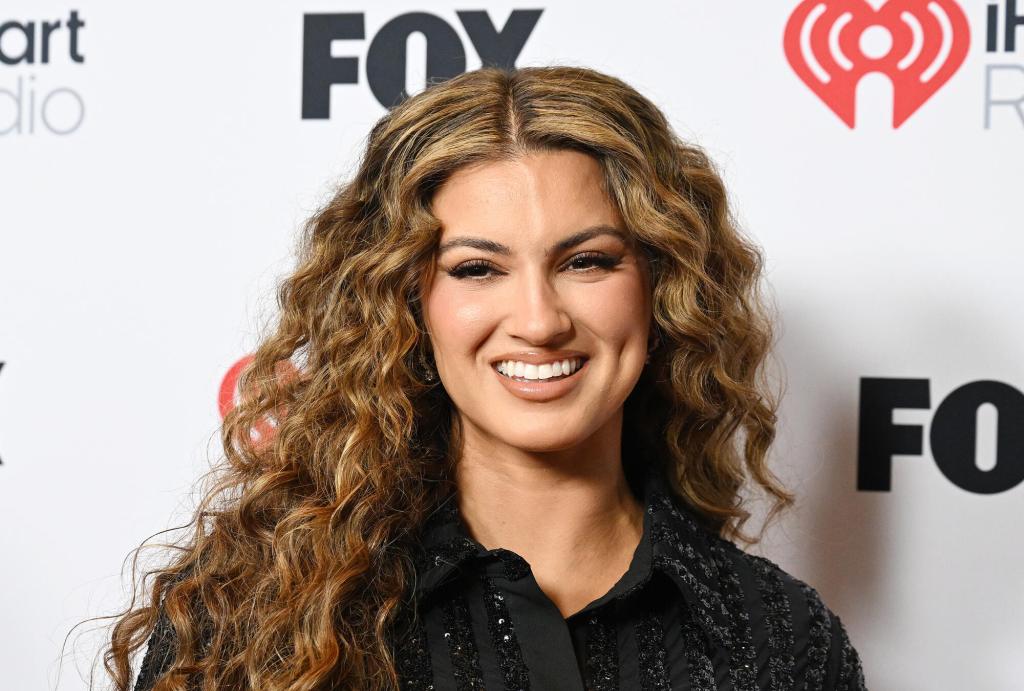
Tori Kelly announced on Instagram on May 5 that her sixth studio album, God Must Really Love Me, is due June 12, and that two singles — “Control” and “Dive” — will arrive on May 8. The news arrives less like a promotional push and more like a continuation of a career that has moved between arenas: viral YouTube singer, pop breakout, Grammy-winning gospel collaborator and, increasingly, a songwriter staking out her interior life.
That interiority is part of the framing here. The label copy around the project calls it Kelly’s “most intimate work yet,” and the timing makes the claim feel credible. The announcement comes roughly six months after the birth of her first child with husband André Murillo, and Kelly says the postpartum period unleashed a rush of ideas that reshaped how she writes. As she put it:
“Before the baby was born I’d tried to work on as many songs as possible, because I thought maybe I wouldn’t want to write once I was in mom mode. But then everything just hit me at once and right away I knew what I needed to say and exactly how I wanted it to sound.”
That line matters because it signals process as much as mood. According to the album notes, Kelly wrote most of these songs alone first, then brought them into the studio to collaborate with a roster of writers and producers. The credits read like a cross-section of contemporary pop and R&B: DIXSON (Kehlani), Nija Charles (Summer Walker), Emily Warren, Ammo, and Kelly’s main studio partners here, Tommy King and Dan Farber. Those names suggest a record that will balance intimate lyricism with a polished, radio-aware sheen — a tension Kelly has navigated before but rarely this deliberately.
Listening back through Kelly’s catalog, the arc is clear. Her early career—YouTube covers, an eventual major-label pop launch with Unbreakable Smile—introduced her as a melody-first vocalist with impeccable control. Then she pivoted: Hiding Place and other gospel-tinged collaborations showed her spiritual and vocal breadth and earned industry respect in different circles. The 2024 self-titled album Tori felt like a consolidation of those skills, a confident, modern pop record that left room for softer moments. God Must Really Love Me looks calibrated to do the opposite of a big pivot: it aims to narrow the frame, to make room within Kelly’s established versatility for a quieter, more domestic perspective.
That said, “quieter” in Kelly’s vocabulary rarely means small. Her voice has always carried an intimacy that reads large in a room; writing alone before studio embellishment could make the record feel closer to a diary than a release schedule. Then again, the presence of collaborators like Nija and Ammo means we should expect hooks and production choices crafted for impact. Emily Warren’s pop instincts and Dan Farber’s history with artists who translate vulnerability into mainstream cuts suggest the album will be tidy where it needs to be and porous where it wants to breathe.
Industry-wise, the timing is smart. Releasing two singles at once is a tactic that acknowledges streaming math — you need multiple entry points — but it’s also theatrical. “Control” and “Dive” arrive on May 8, four weeks before the album drops, giving fans and playlists something to latch onto while the narrative of new motherhood and renewed creativity circulates. For an artist who has repeatedly shifted between niches and formats, this rollout reads like a bid to synthesize those strands into a sustainable next era.
Beyond the mechanics, there’s a cultural quiet worth noting: artists who become parents often sharpen into a different kind of lyricist — more immediate, less performative. Kelly’s statement about everything arriving “all at once” after her child’s birth is a familiar anecdote in that lineage, but it doesn’t make the work predictable. The real question will be whether the songs maintain the friction between private revelation and public songcraft, and whether Kelly lets the production recede enough to let that friction be heard.
God Must Really Love Me is not an obvious commercial gambit. It sits instead as a potentially important pivot in Kelly’s catalog: an attempt to translate personal recalibration into a record that still moves through playlists and radio. If the singles hint at anything, it’s that Kelly is trying to have both: intimacy in the writing room and the reach of a well-engineered pop record. That is, in itself, an interesting place to be.
Whatever the results, the project arrives at a moment when established pop voices are testing quieter textures without forfeiting scale. For Kelly, whose career has depended on voice, versatility and an uncanny knack for melody, God Must Really Love Me could be a consolidation — or the start of a more stripped-back, sustained phase. Both outcomes would make sense. Both would be welcome.