Physical Address
304 North Cardinal St.
Dorchester Center, MA 02124
Physical Address
304 North Cardinal St.
Dorchester Center, MA 02124
Indigenous rapper Kobie Dee will perform at the A-League 2026 Grand Final on May 23/24. His new single "Aim For The Stars" is the Finals sync. The moment connects his community-focused work—Twenny47 Studios, ARIA stage slots, festival appearances—with national visibility.
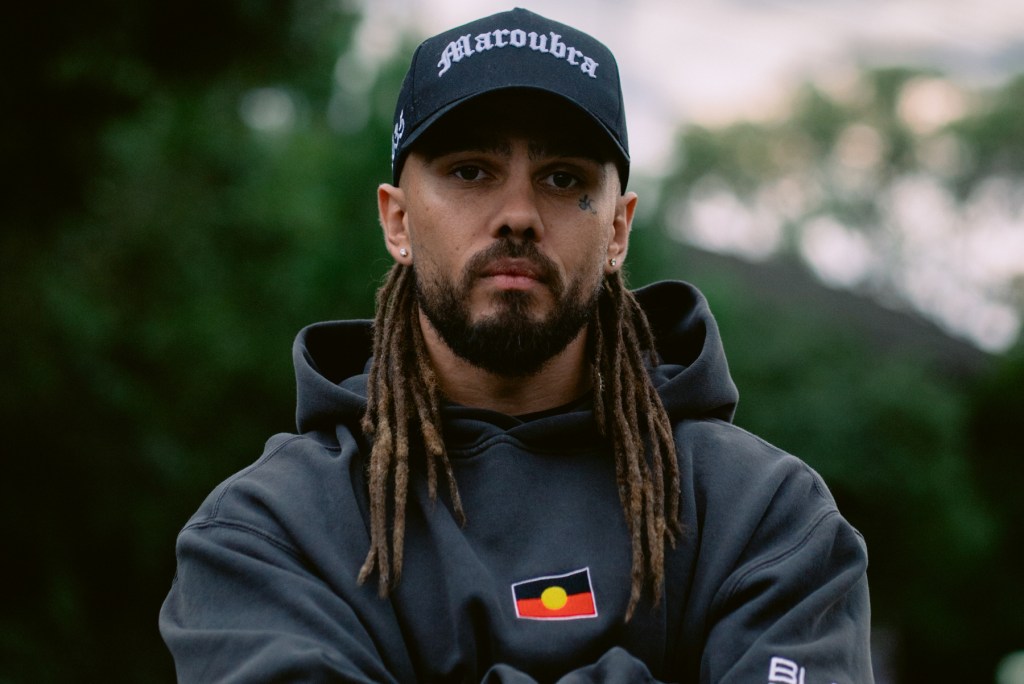
When Kobie Dee takes the stage during the A-League 2026 Grand Final weekend on May 23/24, it will be the first time the Indigenous rapper from Bidjigal Land, Maroubra, performs at a major national sporting event. The booking reads like a small but meaningful recalibration of Australian cultural life: a local voice, born from the eastern suburbs and steeped in community practice, given the microphone before one of the country’s biggest televised sporting moments.
The song that has carried him there is “Aim For The Stars,” released days before the final via Bad Apples Music/Island Records Australia. It is the Finals campaign’s official sync; the ad is currently running on Paramount+. The track is exactly what you expect from a stadium-minded hip-hop single—broad, propulsive, engineered to stick inside a crowd’s chest—but it keeps one foot firmly in Maroubra. That tension between personal geography and mass-scale spectacle is the interesting part.
“I want people to hear this song and feel like no dream is too big,” Kobie says. “Especially young people coming from the same streets I started in. I want them to believe that they can see themselves in these spaces too. For me, ‘Aiming For The Stars’ means taking Maroubra to the world, not leaving it and just telling stories about it.”
“Aim For The Stars” was made with producer NERVE and collaborators WYES, GENE and SMAK. Kobie describes the session as one of those rare, frictionless moments: when the beat landed he went straight in and the lyrics flowed. You can hear that immediacy in the record’s cadence—a kind of breathless optimism that could read as calculated pop-writing if it weren’t anchored by specific local reference points and a clear sense of stewardship.
There is an irony here. Football stadiums and national finals are, historically, places where Australian identity gets performed in broad strokes. For an artist like Kobie Dee, whose last year involved a string of more intimate cultural victories—a NSW Music Prize nomination for “Chapter 26,” an ARIA Awards stage alongside Young Franco, Baker Boy, Anna Ryan and Touch Sensitive, and the founding of Twenny47 Studios in his community—this Grand Final slot is as much about visibility as it is about scale. It’s one thing to break through playlists and festivals; it’s another to be framed into the nightly ritual of sport-viewing households across the country.
Twenny47 Studios deserves a moment of focus. In a scene that often routes First Nations talent through extractive industry relationships, Kobie’s effort to build a creative hub in Maroubra is an act of infrastructure. It speaks to the way his rise has been deliberately communal rather than purely individual. That sensibility filters into the performance choices on “Aim For The Stars,” which balances shout-along choruses with personal lines that name-check home rather than erase it.
Commercial markers back up the cultural ones. Kobie’s catalog has amassed more than 80 million streams; he’s played Splendour in the Grass, Listen Out and Spilt Milk; and he’s taken collaborations with brands such as Lacoste and features in GQ. Those deals can be read cynically, as the usual sponsorship lifecycle, but in this case they also reflect how Indigenous artists are occupying mainstream commercial space on their own terms—a subtle shift from being token guests to being central participants in how Australian culture markets itself.
There will be critics of the sports-sync route. Some argue that stadium-ready anthems smooth over the more complex, angrier work First Nations artists are doing. That is a fair point. But the political economy of music requires mobility: festivals, ARIA stages, studio spaces, brand partnerships and now a Grand Final. Each of those nodes expands the potential audience for the songs that come from Twenny47 and similar initiatives. What matters is what those audiences hear when they listen: whether the small, stubborn details of place survive the translation into arena sound.
Logistics are still in play. The final’s venue has not been confirmed and tickets go on sale at 4pm AEST on Monday, May 18. The official video for “Aim For The Stars” is due later this month. This timing—single release, sync placement, live showcase at a national final, and a forthcoming visual—feels choreographed. But there is a loose, lived-in quality to Kobie’s work that resists the feel of a manufactured pop moment. His lines about taking Maroubra to the world are less slogan than strategy.
Watching him step into a Grand Final slot will tell us a bit about where Australian music and sport meet. Will the crowd belt back the chorus? Will the camera cut to reaction shots of players and fans? Those are small questions with larger implications. For artists from communities that have historically been on the margins of national narratives, these are opportunities to reframe what a national final looks and sounds like.
Whatever happens on the night, Kobie Dee’s placement at the A-League Grand Final is a marker of momentum. It doesn’t resolve the tensions between commercial success and community accountability, but it does make them public in a new way. For an artist who has made a career of translating life in Maroubra into songs that ask for scale without forgetting origin, that is progress worth listening to closely.