Physical Address
304 North Cardinal St.
Dorchester Center, MA 02124
Physical Address
304 North Cardinal St.
Dorchester Center, MA 02124
Billboard Pro's new events calendar compiles festivals, conferences, awards and earnings calls across 2026 and beyond, stitching cultural moments to corporate rhythms. It helps managers, labels and artists plan around competing dates and highlights the global, calendar-driven shape of today’s music
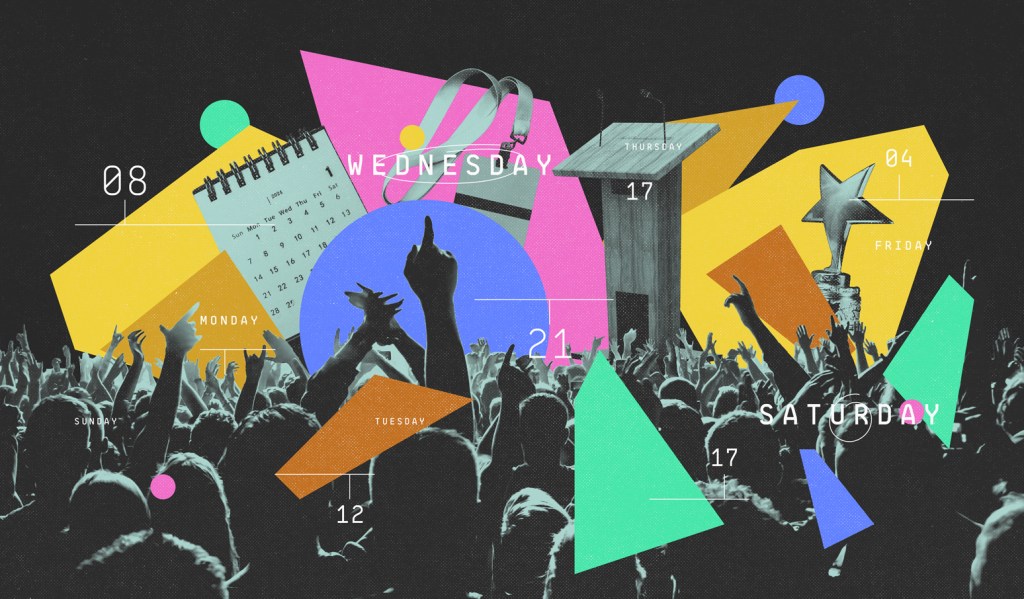
Billboard Pro has quietly done something the industry has needed for a long time: assembled a single, searchable calendar that lays out the year’s conferences, festivals, award shows and even corporate earnings calls. It reads like a map of the modern music business, from SXSW London and Primavera Sound Barcelona to Warner and Sony quarterly calls clustered in early May. That might sound like housekeeping. It is not.
Open the calendar and you see not just dates but competing rhythms. May and June spill over with conference season and festival launches: Music Biz in Atlanta runs May 11-14, A2IM Indie Week sits in New York June 8-11, and the Carolina Country Music Fest and CMA Fest converge in early June in the South. Festivals pepper the months: Rolling Loud in Orlando May 8-10, Bonnaroo lands June 11-14 in Tennessee, and Lollapalooza returns to Chicago July 30-Aug. 2. Coachella is already penciled into April 2027. The list reads like a stereo field of priorities where artist development, corporate strategy, and fan-facing moments collide.
What makes this calendar consequential is how it foregrounds the mix of commerce and culture. It runs corporate events — Live Nation and Sphere earnings calls on May 5, Sony on May 8, Warner on May 7 — alongside artist-facing programming like Roots Picnic (May 30-31) and the Ivor Novello Awards (May 21). For managers, label execs, and agents, that juxtaposition is not trivia. Earnings seasons affect tour insurance, festival budgets and sync deals. Having those dates visible on the same timeline as festivals helps explain why a tour routing, a set time negotiation or a strategic release window can feel squeezed into a three-week period in June.
There is also a geographic logic on display. The calendar is global in scope. You can move from La Linea, a London Latin festival running late April to early May, over to Africa Rising in Johannesburg on May 22-23, and then to Primavera in Barcelona in early June. Japan gets KCON in Chiba May 8-10 and MUSIC AWARDS JAPAN on June 13. That spread matters: international touring strategies, cross-border partnerships and localized marketing campaigns now operate on a near-constant migratory timetable. For smaller teams and independent artists, spotting overlaps early can mean the difference between meaningful exposure and getting lost in a crowded week.
Historically, you might have built a calendar by scraping press releases, following a handful of trade newsletters, and trying to piece together which festivals would actually stay on schedule. The post-pandemic era made that even messier; some festivals retooled, others consolidated, and corporate players moved earnings calls and AGMs into the same periods as fan events. Billboard’s approach — to catalog both the cultural moments and the business mechanics — reads like an attempt to make sense of that noise.
That has implications beyond logistics. Conferences like Music Biz and the Bridge Conference in Croatia are where deals still happen; the former has become a hub for sync and catalog conversations, while the latter leans into creator-economy networking. Festivals remain primary revenue and discovery engines, but conferences are where producers and executives test new tech, from ticketing hacks to AI tools. The calendar puts those conversations in context with where artists will actually be playing.
There is also a tonal shift. The calendar treats awards shows and galas as industry dates rather than only cultural spectacle: the Grammys’ Hall of Fame gala in Beverly Hills on May 8, the Academy of Country Music Awards in Las Vegas May 17, the American Music Awards May 25. Those nights can dictate marketing plans and sponsor activation months in advance. Publishers, pro-rights organizations and trade bodies are visible too: CISAC’s general assembly in Paris on June 4, BMI’s awards in Los Angeles May 12, and NAMM NeXT Europe in Amsterdam on June 10-11. This is the part of the business where policy, advocacy and IP negotiations quietly set the terms for the rest of the year.
Using the calendar felt practical during a recent read-through. I found myself toggling dates for the Brighton Music Conference (May 20-23), the BBC Radio 1’s Big Weekend (May 22-24), and Lightning in a Bottle (May 20-24). The value is not novelty; it is consolidation. For reporters, it’s a reference. For industry people, it is a planning tool. For artists and their teams, it becomes an instrument for timing releases and courting sync partners.
There are limits. A calendar does not replace judgment. It cannot tell you which festivals will break an act, which panels will produce a useful contact, or which earnings calls will meaningfully alter a promoter’s risk calculus. But by pulling these items together it does flatten a structural problem: the fragmentation of information. That matters in a business where timing can determine a headline slot or a denied visa.
Billboard positions the calendar as a single source for major national and international industry events. That claim deserves scrutiny; the list is extensive, but it will be judged by how comprehensive it proves in practice.
There is a tactical upside, too. If you work in sync licensing or festival programming, seeing the full field of activity across a month allows for better negotiation. If you are an independent label weighing whether to send an artist to Kilby Block Party in Salt Lake City (May 15-17) or submit for a slot at The Great Escape in Brighton (May 13-16), the calendar helps you visualize a season rather than a single opportunity.
Billboard’s calendar will also be interesting to watch for what it omits. Niche conferences and smaller regional showcases often become incubators for new scenes; will those make the list or remain discoverable only through word-of-mouth? The presence of global entries like Sónar, Montreux and Montreux Jazz suggests a broad net, but comprehensiveness is a moving target.
If you want your event listed, Billboard offers a direct contact: [email protected]. That line is practical and honest; a calendar is only as good as the events included, and editorial curation will shape the narrative it tells about the state of the industry.
Ultimately, the calendar matters because the music business now runs on more calendars than it ever did. Tours, earnings, panels, awards and festivals are all interlocked. Billboard has not solved the industrys deeper problems, but it has given practitioners a tool that treats time as the strategic resource it has become.