Physical Address
304 North Cardinal St.
Dorchester Center, MA 02124
Physical Address
304 North Cardinal St.
Dorchester Center, MA 02124
At the invite-only ASCAP Latin Awards in Miami on May 5, 2026, Keityn won songwriter of the year again, Romeo Santos took songwriter-artist honors, Karol G’s Si Antes Te Hubiera Conocido was song of the year, and Daddy Yankee added two more ASCAP awards.
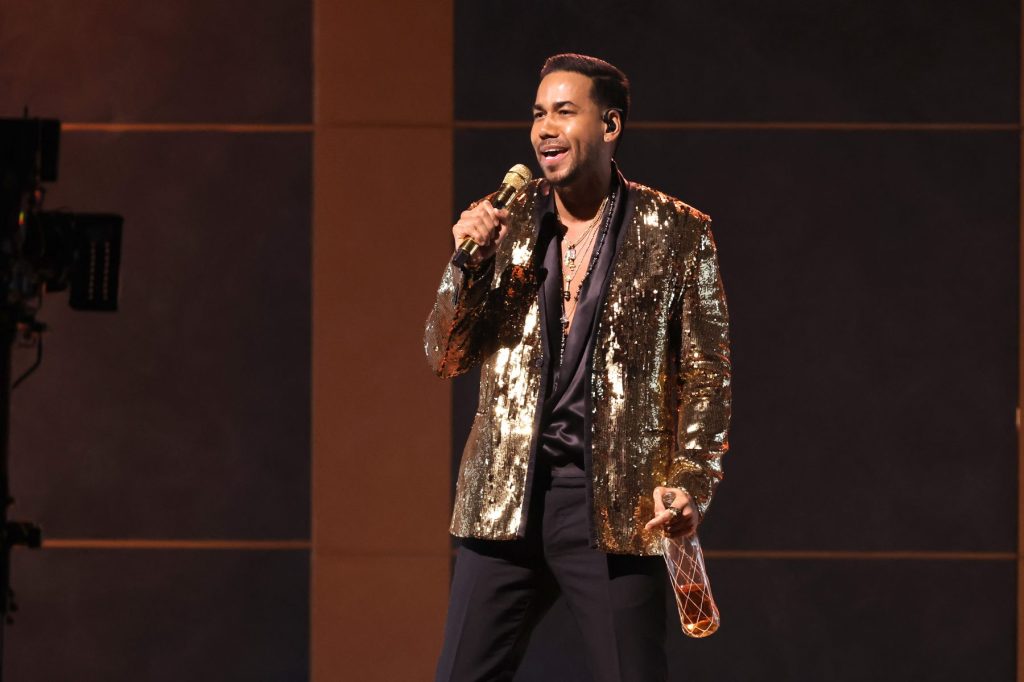
The American Society of Composers, Authors and Publishers unveiled its 2026 ASCAP Latin Music Awards winners during an invite-only ceremony in Miami on May 5, a compact industry night that rewarded writers and publishers who have quietly steered the year in Latin music.
There were expected names and a few reminders about how much the game has shifted toward songcraft as currency. Colombian songwriter Keityn walked away with songwriter of the year for the third time, a recognition built on placements that read like a cross-section of contemporary Latin pop and urbano: Karol G and Marco Antonio Solís’ Coleccionando Heridas, Maluma’s Cosas Pendientes, Feid’s Doblexxó, and the Nicky Jam and Beéle cut Hiekka. Keityn’s repeat win feels less like anointing and more like institutional acknowledgement of an emergent songwriting infrastructure that lives beyond the performer spotlight.
Romeo Santos, who has spent the last decade insisting on bachata’s place in mainstream conversation, took home the ASCAP Latin songwriter-artist of the year award. The honor cited his recent runs: the duet-heavy single Ángel with Grupo Frontera, the Natti Natasha cut Desde Hoy, and the collaboration Khé with Rauw Alejandro. For Santos, this is less a career apex than an extension of a project that has steadily repackaged traditional forms for stadium-sized audiences; the award underscores how his songwriting credit track keeps him relevant even when the production vocabulary around him keeps changing.
Song of the year went to Karol G’s Si Antes Te Hubiera Conocido, credited to ASCAP writer Rios and published by Capital Music Puerto Rico LLC and Kobalt Music Publishing. The song dominated Billboard’s Hot Latin Songs chart for 14 weeks after its June release and resurfaced into the top 10 following Karol G’s Coachella set earlier this year, a reminder that festival moments still turbocharge catalog performance.
If the night had an archetype, it was Daddy Yankee: the reggaetón elder statesman added his 63rd and 64th ASCAP honors for the uplifting Sonríele and the sultry Latina Foreva, performed by Karol G. Yankee’s tally is staggering and literal proof of longevity; he has been recognized at every ASCAP Latin Awards ceremony since 2005. That record is not just personal vanity. It charts a transition in which foundational reggaetón writers have become the reference points for a global pop economy.
On the publishing side, Universal Music Publishing Group earned Latin music publisher of the year for the fourth consecutive ceremony, a sign that best-in-class rosters still tilt power toward a few large entities. UMPG’s repeat win reflects the company’s foothold in contemporary hits by artists such as Bad Bunny and Rauw Alejandro, and it quietly points to the consolidation of influence over catalog exploitation, sync opportunities and global placement.
The rest of the winners list read like an atlas of current taste-makers. Julito Gastón received his first ASCAP recognition for co-writing Bad Bunny’s global single Baile Inolvidable with Antonio Caraballo. Feid was honored for multiple cuts including Doblexxó, Háblame Claro and Verano Rosa. Xavi, Natanael Cano, Tito El Bambino and Danny Ocean also scored nods for recent songs, underlining how urbano, regional flows and pop continue to overlap in publishing credits.
What these awards make plain is the shifting axis of value in Latin music. Performers still command attention onstage and in headlines, but the ASCAP ceremony foregrounded the people who craft the hooks and frameworks that travel across playlists, festivals and markets. It is a reminder that many of the narratives we assign to artists are scaffolded by writers and the publishers that back them.
For established figures like Romeo Santos and Daddy Yankee, the honors are consolidations of long-term strategy: keep writing, keep collaborating, and keep the credits visible. For repeat-winning writers such as Keityn and for upstarts like Julito Gastón, the choices made in the studio this year will likely translate into renewed leverage with labels and publishers. And for the industry at large, Universal Music Publishing Group’s continued run as publisher of the year signals who will hold the keys to catalog monetization as streaming and sync deals keep expanding globally.
The full list of winners is available on the ASCAP site, but the headline here is clear: 2026’s ASCAP Latin Awards were about the invisible architecture of hits. That architecture now looks more crowded, more corporate, and more international than it did a decade ago—and the people who build it are the ones being counted.