Physical Address
304 North Cardinal St.
Dorchester Center, MA 02124
Physical Address
304 North Cardinal St.
Dorchester Center, MA 02124
At an Abbey Road listening on May 5, Paul McCartney revealed "Home To Us," his first duet with Ringo Starr, featuring Chrissie Hynde and Sharleen Spiteri. The track, on the May 29 album The Boys Of Dungeon Lane, reframes memory and modest collaboration over spectacle.
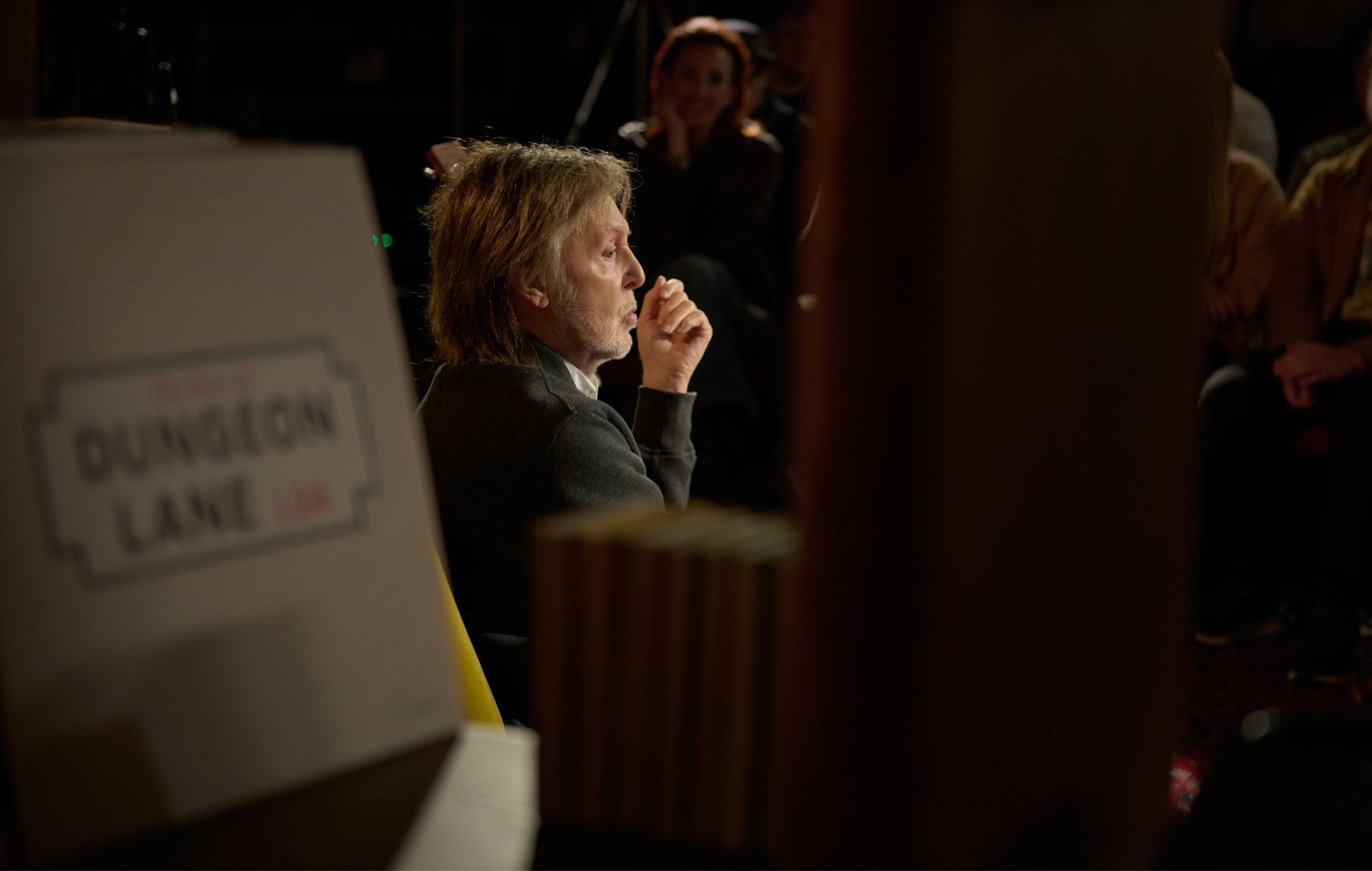
At a low-lit Abbey Road session on the evening of May 5, Paul McCartney stepped off the kind of stage that usually translates into press releases and instead spoke like a man remembering. He played his new record in full for roughly 50 fans and, in conversation afterward, confirmed what those tracks already hinted at: a song called Home To Us is the first time he has recorded a proper duet with Ringo Starr, and it also includes guest vocals from Chrissie Hynde and Sharleen Spiteri.
The song sits on The Boys Of Dungeon Lane, due May 29, McCartney’s first album since 2020’s McCartney III. The new LP has been framed publicly as his most introspective work to date, a collection of Liverpool memories and family portraits. Hearing it at Abbey Road — the same studios where much of that story was famously rewritten — gave the listening session a quiet kind of theatre that the songs themselves reward.
McCartney told the room how the track came together. Producer Andrew Watt, who helmed much of the record, had Ringo in to drum. McCartney, who still plays the bulk of the instruments on the record in the spirit of his 1970 solo debut, had the idea to write a song with Ringo in mind and send it over.
“Ringo went round to the studio and drummed a bit. I said to Andrew, we should make a track and send it to him. So this song is done totally with Ringo in mind,” he said. “He sent me back a version where he just added some lines to the chorus, so I thought, maybe he doesn’t like it. I rang him and he said he thought I only wanted him to sing one or two lines, and I said I’d love to hear him sing the whole thing. So we took my first line, Ringo’s second line, and then we had a duet.”
The duet feels deliberately unvarnished. McCartney’s melodic phrasing — the familiar cradle of his baritone — meets Ringo’s speechlike, slightly weathered delivery. It’s not about mimicking a 1960s harmonization; the arrangement lets their individual textures breathe, and the decision to keep Ringo as the only guest drummer on the record is telling. Where Beatles-era collaborations are often remembered as communal fireworks, this is quieter: two old friends trading lines about the streets that made them.
Hynde and Spiteri arrive like punctuation. Their backing parts are not glossy ornamentation but a kind of conversational echo — a female counterpoint that softens the edges of the song’s recollections without turning it into a duet chorus. That choice also nods at McCartney’s long habit of inviting familiar voices into his records at moments when the narrative needs a third perspective rather than a showy guest verse.
There are connective tissues here to earlier McCartney projects. The solo, multi-instrument approach recalls the home-recording intimacy of McCartney and, later, McCartney III. But where those records sometimes felt inward by necessity, The Boys Of Dungeon Lane leans into memory as a subject — family resilience, the kid-in-the-city stories about John and George, and, centrally, what Liverpool meant to them all before Beatlemania remade the map.
Playing the new album at Abbey Road was more than a publicity nod. It turned the listening into a spatial sentence: these songs are rooted in a past that was once recorded in the rooms around you. The 50 people in attendance were not treated to spectacle so much as a small reckoning; McCartney seemed, in his remarks, less interested in myth-making than in naming particulars. He talks about Ringo’s Dingle neighborhood in the same sentence he speaks of being mugged and of home. That bluntness gives the duet its emotional weight.
McCartney will release the single featuring Starr on May 8, a compact document of what feels like a deliberate late-career strategy: to revisit personal histories with collaborators rather than stage-grand reunions. It is worth noting this comes at a time when Starr himself is active: his album Long Long Road arrived on April 24 via UMe, produced by T-Bone Burnett and featuring St. Vincent, Sheryl Crow and Billy Strings. As Starr told NME, “The sound of country now is getting a bit more country,” a small, candid observation that oddly mirrors the modesty of what McCartney is attempting here — contemporary artists of a certain age circling back to roots, not for nostalgia’s sake but as a way of disclosing what those roots actually taught them.
Ultimately, Home To Us reads as an intimate artifact rather than a headline-grabbing novelty. It reframes McCartney and Starr’s shared history without pretending to rewrite it: two voices on a street they both left, comparing scars and laughing about them. For McCartney, who has alternated between pop-facing largesse and solitary home records for decades, this feels like a conscious, humane choice — the kind of late work that asks listeners to step closer and listen for the small, stubborn details.