Physical Address
304 North Cardinal St.
Dorchester Center, MA 02124
Physical Address
304 North Cardinal St.
Dorchester Center, MA 02124
Savan Kotecha, who co-wrote Justin Bieber’s "Beauty and a Beat," reflects on writing the song from Sweden, Nicki Minaj’s verse, and how Bieber’s Coachella performance helped a 14-year-old hit top global charts again — now being treated like a new discovery by younger listeners.
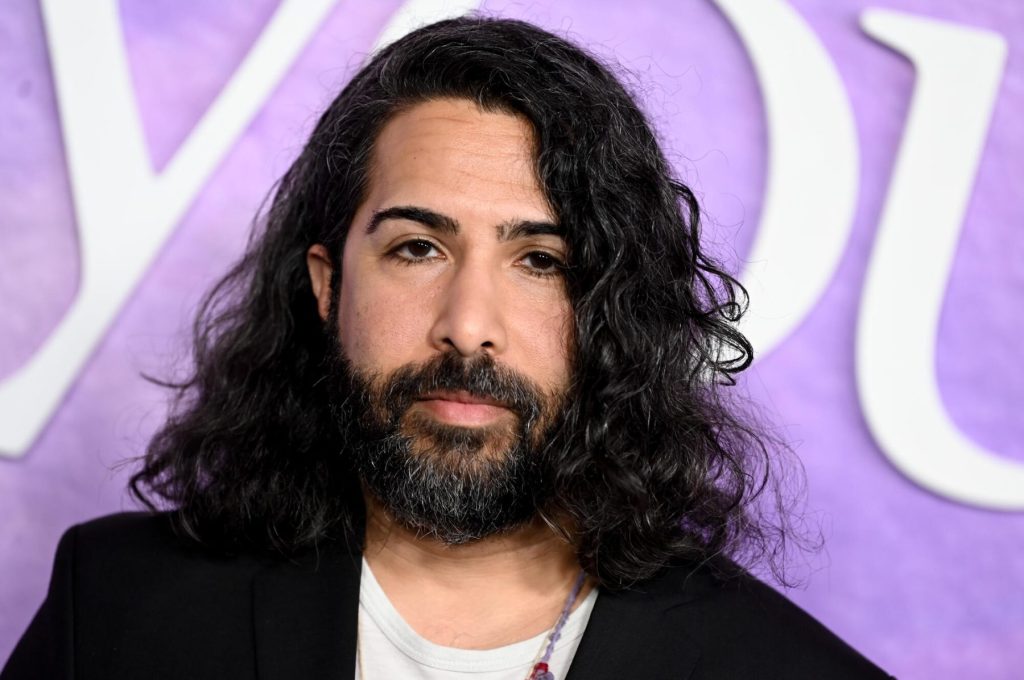
When Justin Bieber cued a montage of early hits during his Coachella headline set and let the crowd sing along — including a weekend-one turn through “Beauty and a Beat” — the song behaved like a sleeper finally nudged awake. Fourteen years after its release, the track shot back up the charts, reaching No. 1 on both the Billboard Global 200 and Global Excl. U.S. charts. For one of its writers, Savan Kotecha, that moment was less a surprise than a reminder of how songs live lives beyond their original moment.
Kotecha speaks with the flattened practicality of someone who has written through several pop eras: he wasn’t in the same room as Bieber when the song was cut. “I didn’t even meet him during ‘Beauty and a Beat,'” he says, remembering a time when he was in Stockholm and Bieber was recording in L.A. The song was built like a relay race: Max Martin set the melody, Kotecha polished lyrics and phonetics on his bedroom floor in Sweden, Zedd brought production sheen, and Nicki Minaj’s verse — including the now-notorious “Selener” line — arrived later to reshape the song’s identity.
“I remember sitting on my bed in my apartment in Stockholm working on it,” Kotecha told Billboard. “When Scooter showed me the music video… I was like, ‘Oh my God.'”
Those details matter less as trivia and more as evidence of a particular pop workflow from the early 2010s: hitmakers operating across cities, each specialist adding a layer until something felt “bulletproof.” Kotecha is candid about the workmanship. He recalls spending more than a week on lyric sounds alone, shaping vowels and consonants until lines landed just right. That kind of phonetic tinkering is the kind of craft that sits under the gloss of a party-anthem chorus.
There is a contrast implicit in his retelling. Kotecha notes that contemporary writers often prioritize raw emotional immediacy over the surgical perfection older pop tended to chase. The result is two valid but different philosophies of hitmaking. Seeing “Beauty and a Beat” become a cultural touchstone again makes a case for both: the song’s architecture allowed it to be rediscovered by an audience that has no memory of 2012, nor reason to think of it as “old.” “My kids weren’t alive when that song came out, so they think it’s a new song,” he says. “Their friends are singing it at school in Sweden as if it’s a new song.”
That generational reboot is one of streaming’s stranger effects. The mechanics of playlists, clips and festival moments compress time; a Coachella sing-along and a placement in a TV scene can produce the same spike in streams. For writers and catalog holders, that has economic and reputational implications: songs become perennial assets, with life cycles that can bounce back years later. Kotecha, who stepped back from constant writing to focus on family, has watched his older work accrue new life while he intentionally slowed down.
It’s worth locating this moment in the arc of Kotecha’s career. He’s not an isolated hitmaker: his catalog includes work for Britney Spears, One Direction, Ariana Grande, Lizzo and Katy Perry. He points to songs that are personally meaningful — like One Direction’s “What Makes You Beautiful,” which he ties into his own life — and even mentions tracks he hopes might resurface, such as Ariana Grande’s “One Last Time.” In 2025 he added co-writing credits on tracks for Ed Sheeran and Tate McRae, showing that even after a period of deliberate withdrawal, he still lands in contemporary pop conversations.
But the Coachella moment reframes a different metric of success. It isn’t just about the next single or the immediate chart impact; it’s about songs moving through culture and finding new ears. Kotecha’s amusement is palpable when he describes doom-scrolling into clips of Bieber performing the song, then texting Max Martin as the streams climbed. “Like millions of people addicted to their phones, I wake up and the first thing I do is doom scroll,” he says with a laugh. “Then two days later it’s No. 1. It’s wild, super fun.”
The comeback also exposes the festival as more than a moment of swagger and headline booking: it has become a platform for memory and reappraisal. When a major artist digs into their back catalog on a stage like Coachella, they’re not just playing nostalgia; they’re offering a portal for younger listeners to discover and recontextualize those songs. For professionals who made the music, that can feel like an exoneration of craft — proof that attention to detail can outlast trends.
In the end, Kotecha’s reaction is modest and a little bemused. He’s grateful, sure, but there’s also a wry acceptance that pop is cyclical. Songs get made, songs get parked, songs get found by kids who sing them like they’re brand new. “They just want s—t that’s great,” he says. “When it’s really great, it’s ear candy — they just listen again and again.” It’s a blunt summation, and maybe the most useful one: quality, regardless of era, still finds an audience.