Physical Address
304 North Cardinal St.
Dorchester Center, MA 02124
Physical Address
304 North Cardinal St.
Dorchester Center, MA 02124
As coastal labels flood Nashville, Big Loud and CEO Seth England offer a view from inside: artists writing more, playlists losing their magic, and a blended label-management model that promises gains but raises questions about concentration and trust.
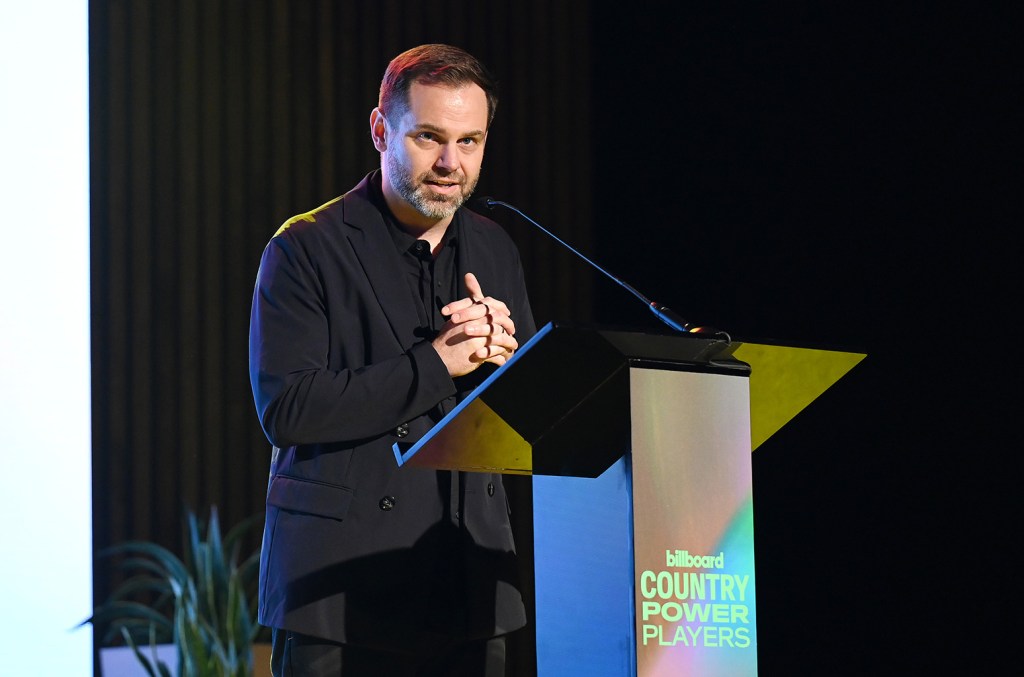
For the last few years Nashville has stopped being a regional backwater for mainstream pop and started looking like a target. Major label groups have opened Nashville arms or revived legacy imprints: a renewed Lost Highway from IGA, Atlantic Outpost popping up, and other coastal outfits planting flags. The result is a crowded field for talent and attention, and in that squeeze Big Loud and its CEO Seth England have become a useful case study in how a local company tries to keep pace without losing its identity.
I listened to England on Billboard’s On the Record podcast not as a PR readout, but as an account from someone who has had his hands in nearly every part of an artist’s trajectory in town – label, publishing, management. That mix of roles is the most obvious reason people watch Big Loud. The company helped build careers for Morgan Wallen, HARDY, Ernest and Florida Georgia Line, among others. It is also the group most visible when the conversation turns to who made Nashville a streaming success story.
Two practical threads ran through England’s conversation: how artists are finding material today, and how trust gets built when the stakes are high. On the first point, England was blunt about the effect of short-form video. Bedroom demos hit TikTok or Shorts and either blow up or they don’t. That changes the pipeline for outside songs. England said Morgan writes roughly six or seven of every ten songs he records, which leaves room for pitching, but points to an artist-driven shift that started before streaming and accelerated with it.
That shift matters because it alters the balance between A&R and artist. England described the working relationship with Wallen as collaborative but exacting. He quoted a simple line Morgan uses in the studio: ‘Have we lost it? Are we still sharp?’ It sounds like ego-checking, and it is. But it is also a method: a continual pressure test against complacency. England credited that mentality for why Wallen stayed open to outside songs when they helped the album shape up, and why Big Loud could convince him to record things like ‘Thinkin Bout Me.’
There is a practical story behind Morgan’s famously long albums. England said the team would come into a record with 18 songs they felt sure about and dozens more that were ‘decent’ but not ready. Rather than prune aggressively, they kept sessions open, kept songwriters booked, and let the best material emerge over time. It is messy. Some tracks slip through. But the payoff is an album you can click through without feeling like three-quarters of it are filler. That process also reflects the streaming age’s appetite for volume, but England framed it less as chasing algorithms and more as following bursts of creative momentum.
The role of playlists and editorial streams came up, with England offering a corrective to a common myth. Editorial placement still helps, he said, but it no longer guarantees a career. He pointed to a rock band on their roster, Dexter and the Moonrocks, where editorial playlists delivered a small fraction of total streams. Editorial may give a song reach, but reach does not always convert to a committed audience. That conversion, England suggested, still looks more like the old country model: fans who seek out an artist and invest time and attention.
Which brings us to the thornier organizational debate: can one company ethically and effectively be manager, label and publisher? England owned the concern people raise about double dipping. His response was operational rather than philosophical: Big Loud does not take two cuts on the same money and, where it makes sense, he has brought co-managers in to provide checks and balances. He also offered a distributional argument – that in his view artists who stayed in that consolidated relationship often ended up better off financially than they would have with separate firms. Those are claims many in town will want to audit, but they matter because they explain why both rising artists and established names sometimes opt for a single-house solution.
There were other moments in the conversation that felt less tactical and more strategic. England argued that country radio has adapted and still functions as a megaphone for records that are already breaking. He warned against overestimating playlists’ ability to build long-term fans. And he circled back to audience behavior: roughly 10 percent of music listeners are the ‘seekers’ who will go find an artist; the rest mostly let music come to them. Country, he said, has a higher proportion of seekers. That is the gen-pop explanation for why careers in country often have longer tails than pop flashes.
England also made a gamble-like observation about legacy artists and platform availability. He said a musician of Garth Brooks’ scale deciding to rejoin streaming in earnest would be a face card for the genre – not just commercially, but algorithmically. That is an industry-thinking comment: big catalogs re-entering the stream economy reshape recommendation graphs and can lift a cluster of artists in their orbit.
Reading this against the backdrop of new labels setting up shop in Nashville, the more interesting question is less about who wins today and more about what counts as success in the next decade. For Big Loud, England’s single throughline was consistent: build an environment that encourages creative risk, stay fluent in attention economies, and keep financial incentives aligned so artists feel materially better off. It is a conservative thesis dressed in entrepreneurial clothing.
That approach has consequences. It can protect established acts and accelerate breakout careers. It can also concentrate influence and invite scrutiny about conflicts of interest. The Nashville moment now looks a lot like the late 2000s in pop, when a few companies learned to master both songwriting rooms and streaming ops. The difference, England argued, is country still has durable listeners who care about context and story. That durability may not stop pop from recycling country elements, but it will change how often those crossovers stick.
Ultimately, hearing England feels like listening to someone who has wagered on continuity rather than novelty. He believes country will remain a significant force for another decade, not because it will dominate the top ten every week, but because the fan base is unusually loyal and because a few structural moves – big catalogs returning to streaming, a few breakout artists – could reset the field in ways neither coastal A&R nor a viral clip can fully predict.
There is optimism in that position, but also a defensiveness. Nashville’s game has changed. How much it changes depends on whether labels from New York and L.A. bring different values, or whether the city keeps knitting artists, songwriters, and executives into the same compact ecosystem that produced the streaming-era hits in the first place.