Physical Address
304 North Cardinal St.
Dorchester Center, MA 02124
Physical Address
304 North Cardinal St.
Dorchester Center, MA 02124
Josh Groban’s Cinematic, out May 8, reimagines movie classics with Jennifer Hudson, his father Jack Groban and the Gay Men’s Chorus of Los Angeles.
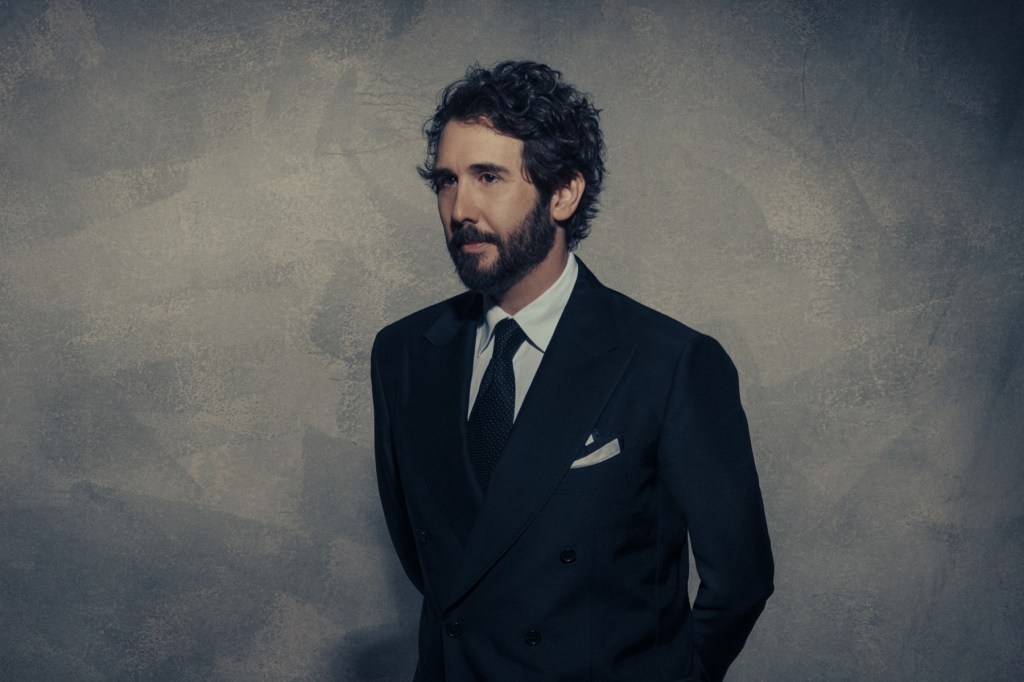
Josh Groban’s Cinematic, due May 8, arrives as a deliberate plunge into movie-music romance: a record built from silver-screen standards such as “As Time Goes By,” “Moon River” and “Can You Feel the Love Tonight,” reshaped through the vocal sensibilities that made Groban a crossover staple.
Groban didn’t arrive at this chest of classics by accident. Cinematic is his first body of new work since his Tony Award–nominated run in the 2023 revival of Sweeney Todd, and that theatrical largesse hangs over the project. “Having just come off of the grandest score of all time with Sweeney Todd, and really putting on my big boy voice for that… I wanted to keep riding that wave… I wanted to stay in that grand zone,” he told the Billboard Pop Shop Podcast. The term “cinematic” kept surfacing in his conversations with collaborators, and it crystallized into what he calls an “MGM-escapism”—an album meant to feel like dimmed lights, a pause on the world and two hours of movement through song.
It is, somewhat paradoxically, an album of covers that he insists landed in a personal place. “This album feels personal for an album that… was such a broad idea. It whittled down to a very specific and very emotionally personal album,” Groban said, noting that the choices of songs, collaborators and the meanings he excavated from familiar lyrics gave the record its center.
Produced by two-time Grammy winner Greg Wells, Cinematic was tracked largely with orchestra and cut across studios in Los Angeles, New York and London, an aesthetic choice meant to support the sweep Groban was after rather than simply dressing up old chestnuts.
The guest list is as much about narrative as it is vocal chemistry. Jennifer Hudson duets on “Unchained Melody”; Groban’s father, Jack Groban, plays trumpet on “Moon River”; and the Gay Men’s Chorus of Los Angeles appears on “Can You Feel the Love Tonight.” Those pairings are rooted in moments and people Groban has long admired.
“We were kind of mutual admiration society for a while. We had met at a bunch of things, and just, I just worshiped Jennifer Hudson,” he said, recalling their first televised pairing on the 2024 CBS special Josh Groban & Friends Go Home for the Holidays. Their big, shared “Noel” note at the end of that performance—”We looked at each other, we went, ‘wow'”—became the seed for asking Hudson to join both the album and his summer tour, which kicks off June 2 in Montreal.
Hudson’s presence on the road was not a marketing afterthought but the fulfillment of a “bucket list of one person” Groban wanted by his side. Their duet on Cinematic, “Unchained Melody,” came together because the song meant something to both of them and because they were willing to navigate the technical awkwardness of turning a solo standard into a duet.
The Gay Men’s Chorus collaboration grew out of a different sort of intent. Groban called their inclusion “my idea,” an effort to both honor Elton John and to add a contemporaneous meaning to the song. Reading the lyric against the backdrop of current events—”reading the lyric and reading the news, reading the lyric and doom scrolling”—led him to see the song as a “call to action, to allyship.” He remembered singing with the chorus in Washington, D.C. for President Obama’s inauguration and wanted the chorus’s voices to carry both message and weight on the new record.
The most intimate moment on Cinematic is not a guest star but Groban’s father. Jack Groban, who largely stepped away from playing trumpet for decades, appears on the record after Josh discovered a one-of-one album his father made in his early 20s and digitized it. That backstory is important to the way Josh framed the recording: this was not just a session musician’s cameo but, he said, a reckoning with a personal musical inheritance.
“Watching my dad fly in that studio… was just, you know, something I will remember for the rest of my life. To have… a proper recording of his playing with me, I’ll never forget it,” Groban said, recounting a day at Sunset Sound recorded in the room Louis Armstrong favored, complete with Armstrong’s stool and an antique microphone.
Groban also revealed that trumpet luminaries Terence Blanchard and Wynton Marsalis had offered their help, “send me in coach,” he said, underscoring how much reverence the project commanded among peers. Ultimately, the choice to bring his father into that lineage felt like the most resonant move.
Groban repeatedly framed his approach to these standards as less about re-creation than interrogation. “I didn’t want to just do, you know, the Josh Sings… here’s just a nice bunch of nice sounding songs. I want to be able to talk about these songs in a way that has meaning, even if it’s a song that’s been around forever,” he told the Pop Shop hosts. That intention animated everything from arrangements to guest parts: honoring the original while adding what he called a “yes-anding” for today.
That mix of nostalgia and present-day purpose is what gives Cinematic its odd dual identity—at once a tribute to the artifice of film scoring and a record aiming for emotional specificity. The orchestral scale is there to create a pause in the day-to-day, but the human details—the father’s trumpet, Hudson’s duet, the chorus’s presence—pull the listener back toward something personal.
Excerpts of Groban’s conversation appear on the Billboard Pop Shop Podcast, where hosts Katie and Keith also discuss Noah Kahan’s The Great Divide debuting at No. 1 on the Billboard 200 and Ella Langley’s “Choosin’ Texas” returning to the top of the Hot 100. For Groban, the album, the collaborators and the upcoming tour feel like extensions of a career that has long straddled pop, theater and the kinds of big arrangements that invite communal listening.
Whether Cinematic will reframe those standards for skeptical listeners or simply supply comfort for longtime fans remains to be heard. But the record’s combination of high-concept framing and deeply personal choices suggests Groban is trying to do more than collect favorites—he’s attempting to translate their cinematic appeal into something that feels lived-in and immediate.