Physical Address
304 North Cardinal St.
Dorchester Center, MA 02124
Physical Address
304 North Cardinal St.
Dorchester Center, MA 02124
Beethoven & Dinosaur’s Mixtape is a short, music-centric coming-of-age game out today, driven by a stacked alt-rock soundtrack and a 1990s sensibility.
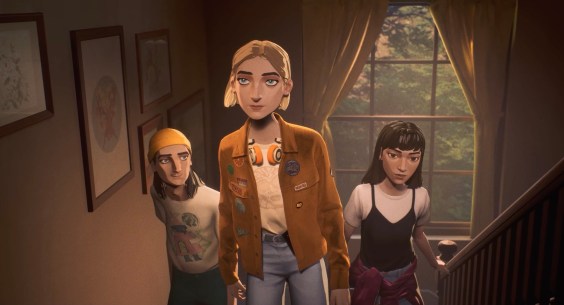
Mixtape, out today from Melbourne studio Beethoven & Dinosaur, arrives as a short, music-forward coming-of-age trip with a soundtrack that reads like an alt-rock fever dream. The game stages a familiar teen-movie arc: three kids racing toward a mythic end-of-school party while trying not to get caught, and it leans on its record collection to carry much of the mood.
The studio behind The Artful Escape has traded the cosmic platformer for a quieter, more domestic story. The protagonist, Stacey Rockford, inhabits what feels like the 1990s and nurses the aspirational fantasy of becoming a music supervisor in New York. According to The New York Times, Mixtape is a small, focused, evocative game that you can play in just three hours, and that concision is part of its character: it does not attempt to map out the music industry, but it relies on music selection as a core storytelling device.
That reliance is both tactical and aesthetic. The game’s music supervising is not background color; it is an active element of how scenes land and how players understand the characters. Even if Mixtape does not dramatize the logistics of a music supervisor’s job, the choices inside the game require a kind of curatorial taste that feels plausibly professional.
Where some narrative games use licensed songs as nostalgic shorthand, Mixtape treats its playlist as a structural engine. The soundtrack is one of the title’s main selling points, stacking canonical alternative and post-punk names — Smashing Pumpkins, Joy Division, the Cure, Devo, Siouxsie And the Banshees, Iggy Pop, Roxy Music, Portishead, Lush, and Silverchair — alongside deeper cuts from Alice Coltrane, the Chi-Lites, and B. J. Thomas. Those choices give the game a tonal specificity: it’s anchored in a particular musical memory while remaining willing to surprise with less-expected inserts.
For players familiar with Beethoven & Dinosaur’s earlier work, Mixtape marks a shift toward intimacy. The Artful Escape was flamboyant and cinematic; this new title opts for modesty and restraint, a design decision that mirrors its three-hour runtime. That brevity allows the experience to feel cohesive rather than padded, but it also raises questions about how fully a game can interrogate the ambitions of a character who wants to break into music supervision.
In practice, Mixtape’s strengths are straightforward: a compact narrative, purposeful soundtrack curation, and a sense that music selection here matters beyond mere decoration. Whether its teenage reveries and playlist-driven beats will register the same way for every player depends on how much the sonic palette resonates with personal memories. For those invested in the crossover between music fandom and game design, Mixtape is a precise experiment worth hearing.