Physical Address
304 North Cardinal St.
Dorchester Center, MA 02124
Physical Address
304 North Cardinal St.
Dorchester Center, MA 02124
Keir Starmer tells fans he will "stamp out ticket touts for good" in an NME-exclusive letter, promising legislation to ban resale above face value.

Keir Starmer has written directly to live music fans to promise he will “stamp out ticket touts for good”, in a letter NME can exclusively reveal. The commitment arrives against a fraught backdrop: a 2024 Labour manifesto pledge, a January 2025 government announcement of a price cap and consultation, and renewed frustration from artists and industry figures when concrete action appeared to stall.
Labour first pledged to tackle resale in its 2024 manifesto with a promise to “put fans back at the heart of events by introducing new consumer protections on ticket resales”. That promise translated into a January 2025 move to cap how much secondary sellers can charge and to launch an official consultation into the industry and controversial ‘dynamic pricing’ practices.
The consultation ran from January 10 until April 4, but by last November the lack of a firm timetable had prompted high-profile pushback. Management teams for artists including Radiohead, Sam Fender, Dua Lipa, Ed Sheeran, Nick Cave, Fontaines D.C., and Keane joined an open letter warning against a government U-turn.
In his latest correspondence with fans, Starmer leans into the cultural and economic heft of the British music scene. He references the country as “the birthplace of current superstars” such as Olivia Dean, Adele, Ed Sheeran, and Dua Lipa, and argues the industry is an engine for jobs and growth that must be shielded from unscrupulous resellers.
“To all live music fans,
“I grew up with music all around me. I listened to it at home. I played the flute, piano, recorder and violin. And I also know there is nothing quite like the atmosphere and feeling of watching live music.
“Even now as Prime Minister, to wind down at the end of a long day I will put music on with the family. So I know firsthand how important it is to the people of this country – one that is the birthplace of current superstars from your industry like Olivia Dean, Adele, Ed Sheeran, and Dua Lipa – that they are able to afford the escape of going to a live event such as a concert or a gig at the end of a long week.
“And our creative industries are booming. I’ve made them one of the eight sectors of our Modern Industrial Strategy so that we can keep backing you with big commitments from government. You are an engine for economic renewal across our country, bringing billions into the British economy, creating jobs and opportunity.
“I have made a commitment to put fans first, and working with the Culture Secretary Lisa Nandy I will make sure this happens as quickly as possible.

The crowd at Reading 2023. Credit: Andy Ford for NME
Starmer pledges a crackdown on what he calls “ruthless ticket touts preying on music fans by selling tickets for exorbitant and unaffordable prices”, and promises to make it illegal to resell tickets for more than their original cost. “If we are going to crack down on unscrupulous ticket touts and really put fans first, we must work with groups and people across the sector – including fans, performers and campaigners – as well as parliamentarians to ensure we get it right the first time and make the lasting change you want and deserve,” he writes.

The crowd for Declan McKenna live at Reading 2023. Credit: Andy Ford for NME
The letter arrives as fresh research from Which? underscores the scale of the problem. Which? estimates that, without tough government action, the public could be overcharged to the tune of about £24 million over the summer. The findings single out blockbuster names: touts could pocket an estimated £6.6 million from resale of Harry Styles tickets alone. Which? found examples of tickets originally priced at £200 listed for as much as £3,622; BTS tickets with a face value of £450 were seen for £4,872; and Ariana Grande tickets originally at £135 have been spotted listed for over £2,800.
Which? summarised average markups at 274 percent for Grande, 312 percent for BTS and 159 percent for Styles, and estimated that sellers operating as touts could account for roughly £18.5 million of the potential summer overcharge total.
The government has framed the proposed rules as a blunt fix: make it illegal to re-sell live-event tickets for more than their original cost. Officials say that would reduce secondary prices by about £37 on average per ticket and save consumers around £112 million a year, while also eliminating the large fees that inflate many listings on resale platforms.
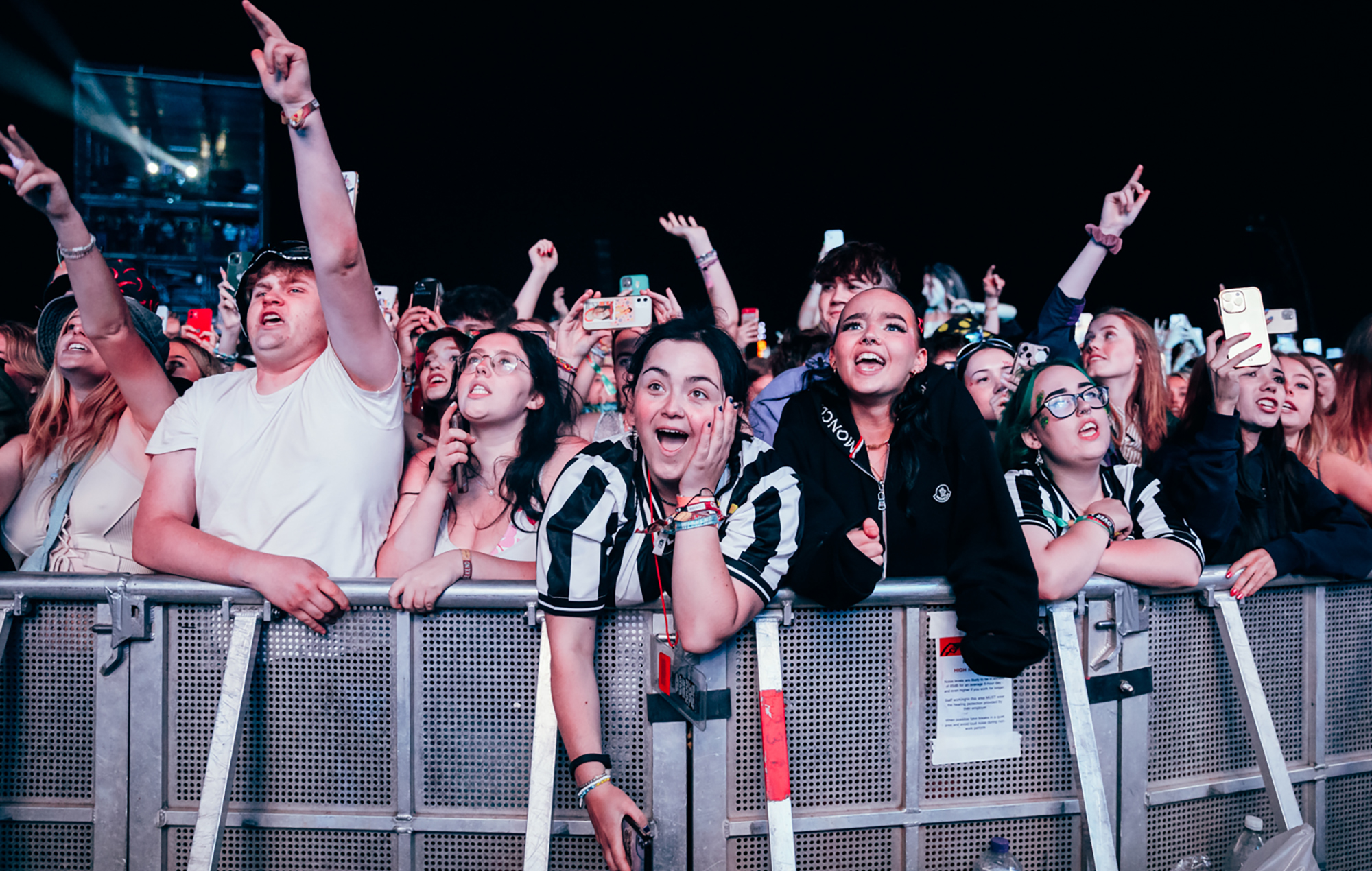
The crowd for Sam Fender at Reading 2023. Credit: Andy Ford for NME
Culture Secretary Lisa Nandy told NME the policy marks a turning point. “Finally, we’re here,” she said at the time of the January announcement. She added practical detail: people will still be able to resell tickets, “but not for any more than the price they paid for it. They’ll have to sell it at face value.” Nandy argued the approach protects fans while allowing legitimate last-minute sellers to recoup costs.
The ticket reforms are part of a wider package of recent moves aimed at shoring up live music: ministers have signalled support for venues after a backlash to proposed business rates changes, and announced plans for a new ethical resale platform in partnership with Music Venue Trust.
Starmer has also previously endorsed measures to sustain grassroots venues. In an NME interview last August, he voiced support for a £1 ticket levy currently used on major tours by artists such as Coldplay, Katy Perry, Sam Fender and Mumford & Sons. “I’m very supportive of this initiative, the £1 levy going back into grassroots [venues], because so much of our music is grassroots,” he said, adding that he would like to see it expanded.
The Prime Minister’s letter reads as both reassurance and a political signalling device: he is pitching ticket crackdown as consumer protection and cultural stewardship. Whether the rhetoric translates into enforceable, long-lasting law will depend on how quickly the promised legislation moves through parliamentary processes and how well the details stand up to industry scrutiny. For fans and artists who have been pressing the issue for months, the letter will be read as progress; for others, it will be judged on delivery.