Physical Address
304 North Cardinal St.
Dorchester Center, MA 02124
Physical Address
304 North Cardinal St.
Dorchester Center, MA 02124
A staff-selected look at Janet Jackson's 60 best songs, spanning Control, Rhythm Nation, Damita Jo, and Unbreakable.

Forty years after Control turned Janet Jackson into a pop force, her catalog still reads like one of the sharpest bodies of work in modern R&B and pop. Ten No. 1 singles on the Billboard Hot 100, 27 top 10 hits, and a 15-year stretch of chart dominance only tell part of the story. The deeper pull of Jackson’s discography comes from the songs that lived outside the obvious singles, the album cuts and remixes that made her records feel larger than the numbers attached to them.
To mark her 60th birthday on May 16, Billboard’s staff picked through that catalog and came up with 60 of her best songs. The list moves from her early partnership with Jimmy Jam and Terry Lewis through Unbreakable, the 2015 album that reminded listeners she could still sound current without chasing the moment. Jackson’s reach has always spilled past music into television, film, fashion and dance, but here the focus stays on the songs themselves, where her range is easiest to measure.
The selections below don’t just circle the era-defining hits. They also make room for the more intimate, stranger, or unfairly overlooked records that helped shape her reputation in the first place. For Jackson, that balance has always mattered. The singles made her unavoidable. The rest of it made her catalog last.
“Son of a Gun (Betcha Think This Song Is About You)” (All for You, 2001)

This All for You standout leans hard on Carly Simon’s “You’re So Vain,” even bringing Simon back for new spoken-word passages. Jackson pushes the idea further than the original by sharpening the language and keeping the chorus in constant motion, the whole thing driven by a rapid-fire hip-hop sensibility. It’s one of her nastier dismissals, and one of her most efficient. “I’d rather keep the trash and throw you out/ Stupid b–ch in my beach house” lands with the kind of clipped disdain that made Jackson’s put-downs feel surgical rather than sloppy. – Katie Atkinson
“Rope Burn” (The Velvet Rope, 1997)
This was one of the first songs that turned Jackson’s live show into a site of controlled provocation, with the now-famous image of a fan being brought onstage, tied down and slowly grinded on while everyone involved seemed to hold their breath. The song itself is more nuanced than its title suggests. However much the record flirted with S&M imagery, “Rope Burn” was really about trust, tension and the willingness to endure a little pain. – Angel Diaz
“You Need Me” (Miss You Much B-side, 1989)
“You Need Me” plays like a companion piece to “Rhythm Nation,” only with the family history pulled closer to the surface. Jackson addresses her fractured relationship with her father and former manager, Joe Jackson, by tracing the distance back to childhood. She doesn’t sound combative so much as insistent, as if the point is no longer whether he needs her, but whether he’ll finally admit it. “Now the table’s turned, so tell me you need me,” she sings, making the demand sound almost matter-of-fact. – Christine Werthman
“Unbreakable” (Unbreakable, 2015)
The title track to Jackson’s 11th studio album eases in with a soft-focus confidence, her voice taking stock of mistakes and the kind of love that carries someone beyond them. Then the song settles into a mid-tempo groove that folds R&B, pop and dance into one clean motion. More than a decade later, it still carries the same charge. It also marked a strong reunion with Jimmy Jam and Terry Lewis, who helped Jackson land her seventh No. 1 on the Billboard 200 and her first release on Rhythm Nation. – Gail Mitchell
“Because of Love” (janet., 1993)
The fourth single from janet. sits at an interesting crossroads in her career. The bright vocals and throwback “shoop-shoops” nod back to the lighter edge of her earlier work, but the production already points toward the harder, hip-hop-shaped future waiting around the corner. Jam and Lewis keep the beat tight and sly, giving Jackson room to sound both airy and fully in control. – Joe Lynch
“This Body” (20 Y.O., 2006)

There has always been a sharp contrast in Jackson’s catalog between the almost startling innocence of her love songs and the tracks that are far less interested in playing coy. “This Body” belongs to the latter group. Co-produced with Jermaine Dupri and longtime partners Jimmy Jam and Terry Lewis, it rides an acid-funk pulse while Jackson addresses the men who fantasize over her magazine imagery. The song lands differently in the context of the mid-2000s, when scrutiny around her weight and the fallout from the 2004 Super Bowl with Justin Timberlake made the tabloid treatment of Jackson feel especially punitive. – Rebecca Milzoff
“Come Back to Me” (Rhythm Nation 1814, 1989)
One of Jackson’s most graceful ballads, “Come Back to Me” takes its time. The song opens with 52 seconds before she even begins to sing, and the strings were her idea. Thunder and rain close it out, nodding toward the Quiet Storm tradition that gives the track its atmosphere. It also became her only single to reach No. 1 on Billboard’s Adult Contemporary chart, and she later recorded a Spanish-language version, “Vuelve a mí.” – Paul Grein
“SloLove” (Damita Jo, 2004)
Buried near the end of Damita Jo‘s long tracklist, “SloLove” is exactly the kind of deep cut that tends to get lost in discussions of Jackson’s bigger hits. The album gave room to her Damita Jo and Strawberry alter egos elsewhere, but this song feels more direct, even carefree, as she glides over a house-leaning groove and makes a simple promise sound deliciously unhurried. – Glenn Rowley
“70’s Love Groove” (“You Want This” B-side, 1994)
If “Any Time, Any Place” seemed too fast in the groove and too restrained in the temperature, “70’s Love Groove” pushes the mood into fuller, slower territory. As a B-side, it could have easily been disposable. Instead, it unfolds with patience, changing keys and stretching out the tension without ever losing its shape. It’s one of those Jackson tracks that understands atmosphere as a form of structure. – Andrew Unterberger
“Damita Jo” (Damita Jo, 2004)
Long before Beyoncé’s I Am… Sasha Fierce or Britney Spears’ Britney Jean, Jackson had already used an alter ego to sharpen her pop persona. Damita Jo, her middle name, became a way to extend the control narrative she had been refining for years. The title track is built on punchy hip-hop funk, with Jackson using the character to say what she might not under her own name. The song’s bluntness is part of the point. – G.M.
“The Best Things in Life Are Free” (with Luther Vandross, Bell Biv DeVoe & Ralph Tresvant, Mo Money OST)
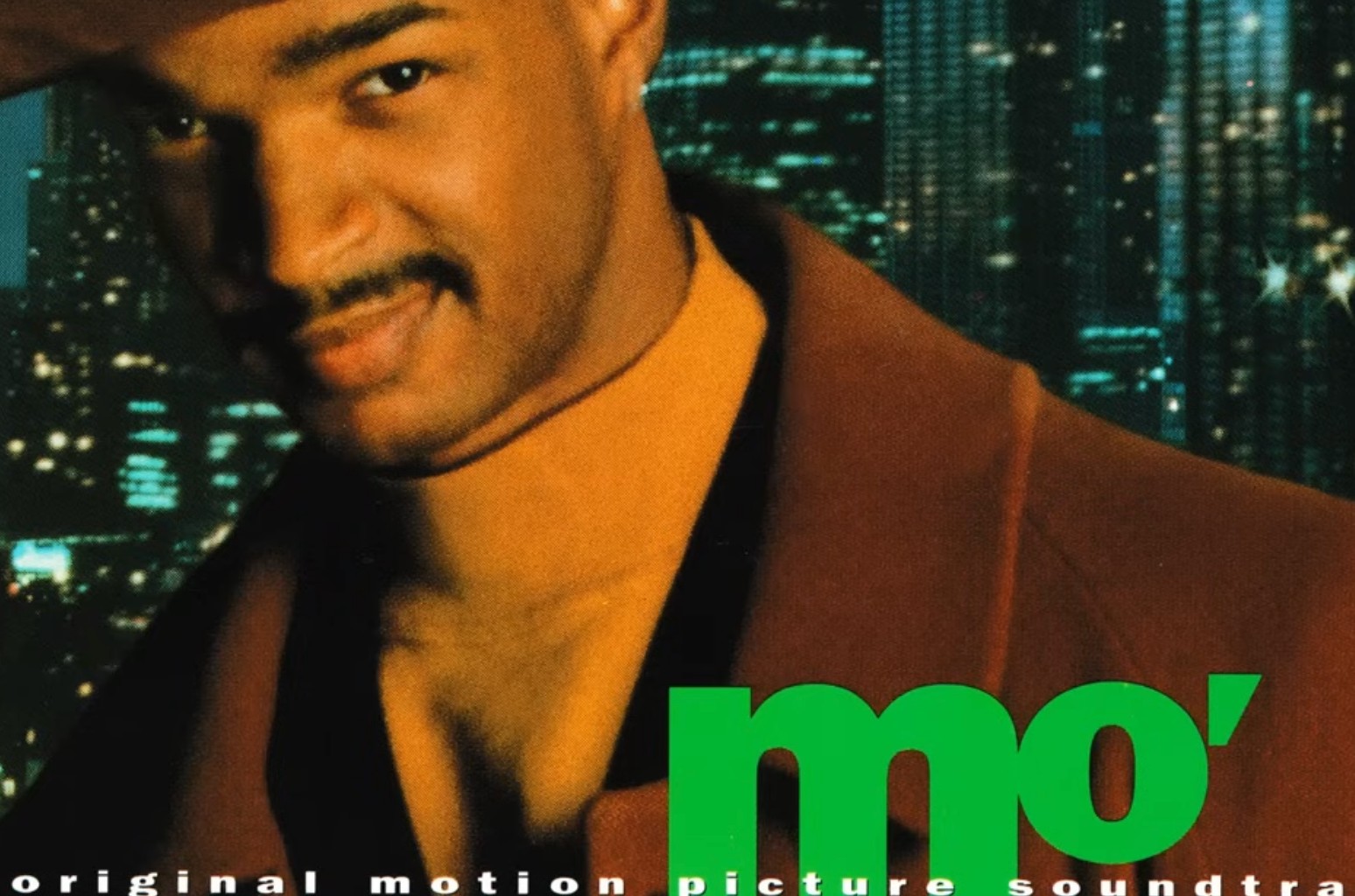
Jackson and Luther Vandross earned a Grammy nomination for their duet version of this song, and the chemistry between them gives the record its easy sparkle. The remix with Bell Biv DeVoe and Ralph Tresvant plugged the track into the new jack swing moment, which helped it fit naturally on the Mo’ Money soundtrack, where it appeared alongside a record that reached No. 6 on the Billboard 200. The song also samples George McCrae’s 1975 hit “I Get Lifted.” – P.G.
“One More Chance” (“If” B-side, 1993)
Originally a Jacksons track from the 1984 Victory album, written by Janet’s brother Randy, “One More Chance” found a second life in this version before janet. arrived. Some radio DJs gave it airplay early, which was unusual enough on its own. Jam and Lewis softened the ’80s edges of the original and made the song fit the era better, while keeping its subject matter relatively restrained compared with much of the album. – A.D.
“State of the World” (Rhythm Nation 1814, 1989)
One of the most openly politically charged songs on Rhythm Nation 1814, “State of the World” begins with a jolting collage of TV-channel noise: news reports on homelessness, beauty ads, Flintstones effects, crime statistics. But Jackson does not sink into doom. Instead, the song turns that overload into movement, with Jam and Lewis driving it on relentless beats and a sharp new jack swing edge while Jackson takes on poverty, drugs and homelessness with the force of a dancer, not a preacher. – J.L.
“Feedback” (Discipline, 2008)
Before D’Mile became known for helping shape standout R&B albums of the early 2020s, he scored one of his first major chart successes with “Feedback,” the lead single from Discipline. The record pushes Jackson’s longstanding sexual frankness into electro-pop territory, with vocal effects that make her sound almost mechanical and lyrics that double as a kind of instruction manual. By then, the idea of Jackson as a late-career innovator had already become part of the frame, and this song makes a persuasive case for it. – G.M.