Physical Address
304 North Cardinal St.
Dorchester Center, MA 02124
Physical Address
304 North Cardinal St.
Dorchester Center, MA 02124
Taylor Swift, Beyoncé, Ray Charles, the Go-Go’s and more join the 2026 National Recording Registry class.
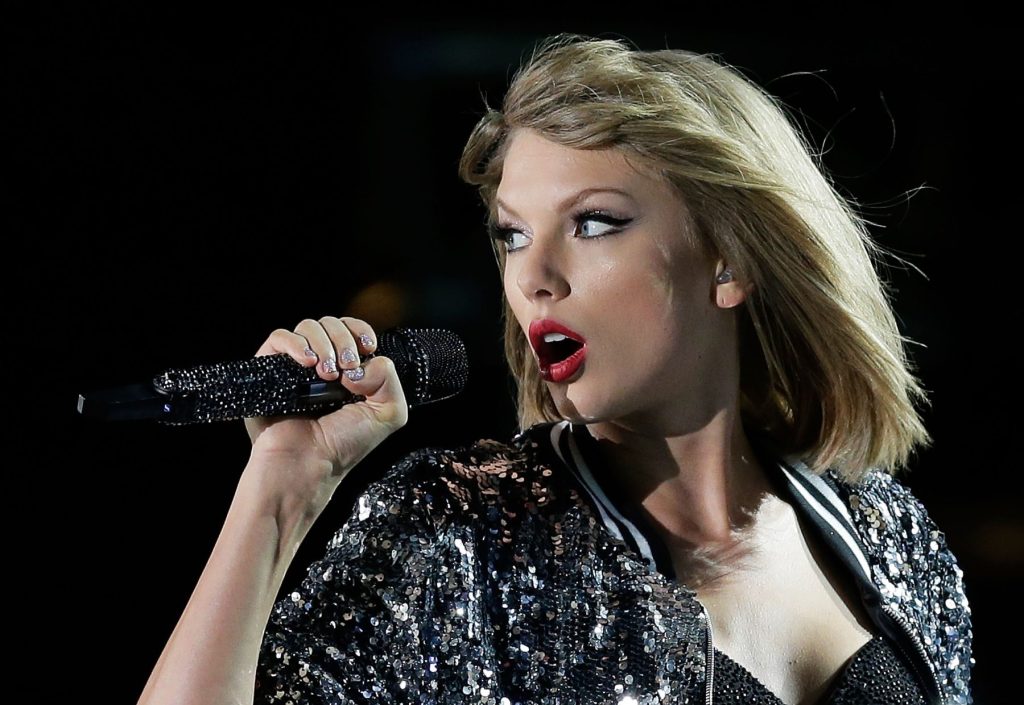
Ray Charles has joined a very short list. With the Library of Congress adding his 1962 album Modern Sounds in Country and Western Music to the National Recording Registry, Charles now has two recordings in the archive, after his 1959 hit “What I’d Say (Part I & II)” was among the Registry’s inaugural 2002 selections.
The 2026 class, announced Thursday, May 14, stretches from Taylor Swift’s 1989 and Beyoncé’s “Single Ladies (Put a Ring on It)” to José Feliciano’s “Feliz Navidad,” Chaka Khan’s version of Prince’s “I Feel for You,” and the original Broadway cast album to Chicago. The Registry, overseen by the Library of Congress, chooses 25 recordings each year that are at least 10 years old and deemed culturally, historically, or aesthetically significant. This round brings the total to 700 titles.
Some of the year’s most conspicuous additions are albums that helped define specific commercial eras without looking especially interchangeable on paper: the Go-Go’s Beauty and the Beat, Stevie Ray Vaughan and Double Trouble’s Texas Flood, and Weezer’s self-titled debut, often called The Blue Album. Ric Ocasek, the Cars figurehead, produced Weezer; the Cars’ own debut entered the Registry two years ago.
Swift’s 1989 and Beyoncé’s “Single Ladies” also make the Registry’s pop present feel connected to its recent past. 1989 was the Grammy-winning album of the year, and “Single Ladies” took song of the year; both were also No. 1 records on Billboard’s major charts, with 1989 topping the Billboard 200 and “Single Ladies” reaching No. 1 on the Hot 100. The same goes for other additions this year: The Byrds’ “Turn! Turn! Turn! (To Everything There Is a Season),” Gladys Knight & the Pips’ “Midnight Train to Georgia,” and “Single Ladies” all hit No. 1 on the Hot 100, while Modern Sounds in Country and Western Music, Beauty and the Beat, and 1989 all reached No. 1 on the Billboard 200.
There is also a little lineage work happening. Rosanne Cash’s The Wheel was chosen 23 years after voters added her father Johnny Cash’s Johnny Cash at Folsom Prison, and the Registry says this is the first time a father and daughter have both been selected. Beyoncé’s inclusion comes eight years after Jay-Z’s The Blueprint was inducted, making the Carters one of the few married couples represented in the collection.
Producers, too, are getting their own sort of bookkeeping. Tony Brown and Don Costa each appear twice in the 2026 group. Brown produced Vince Gill’s “Go Rest High on That Mountain” and co-produced Reba McEntire’s Rumor Has It; Costa produced Paul Anka’s “Put Your Head on My Shoulder” and arranged and conducted Kaye Ballard’s “In Other Words,” the first recorded version of the future standard “Fly Me to the Moon.”
Anka’s song is one of those registry entries that reminds you how often the canon is built in the margins of the charts. “Put Your Head on My Shoulder” peaked at No. 2 on the Hot 100 in 1959, held off the top spot by Bobby Darin’s “Mack the Knife,” itself inducted in 2015. Anka, now 84, picked up a BMI Icon Award on Tuesday, May 12, just two days before the Registry announcement. Sometimes the timeline really does do the work for you.
The class also has room for comedy, novelty and outright left turns. Spike Jones and His City Slickers’ “Cocktails for Two,” their 1944 lurch through the Duke Ellington standard, is one of the rare comic singles in the Registry, alongside Allan Sherman’s “Hello Mudduh, Hello Fadduh! (A Letter From Camp).” And the inclusion of Bobby Prince’s Doom soundtrack marks the third time video game music has been honored, following Koji Kondo’s Super Mario Brothers theme in 2023 and Daniel Rosenfeld’s music for Minecraft in 2025.
House music is there too. Jamie Principle’s “Your Love,” first released in 1986 and then again the next year in a remix with Frankie Knuckles, was inducted after landing at No. 5 on Billboard’s 2025 staff list of the 100 best dance songs of all time. So was “The Fight of the Century: Ali vs. Frazier,” the broadcast of the March 8, 1971 heavyweight bout at Madison Square Garden, continuing the Registry’s habit of treating landmark sports audio as part of the national record. A broadcast of the Joe Louis and Max Schmeling fight from Yankee Stadium in 1938 was added previously.
In statements released with the announcement, acting Librarian of Congress Robert R. Newlen called recorded sound “essential” to daily life and national heritage, and said the Registry exists to preserve “our national playlist for generations to come.” Robbin Ahrold, chair of the National Recording Preservation Board, pointed to the breadth of the 2026 class as a reflection of the American experience, timed to the country’s 250th anniversary: “From icons of R&B to a holiday favorite en Español, from a legendary sports broadcast to this generation’s superstars, it is a thrilling reflection of America at its best.”
The public submitted more than 3,000 nominations this year, with Weezer among the most frequently nominated titles. Nominations can be made year-round through the Library’s website, and submissions for next year will be accepted until Oct. 1.
The Library also published the full 2026 list in chronological order, along with its own explanations for each pick. Those notes frame the Registry the way it usually functions now: less like a museum shelf than an argument about how records, broadcasts, songs and soundtracks actually travel through American culture.
Spike Jones and His City Slickers, “Cocktails for Two” (1944)
Label: Victor
Producer: Spike Jones
Best Selling Retail Records peak: No. 4
Grammys won: Pre-dates Grammys
LOC says: “’Cocktails for Two’ was a well-established romantic standard by 1944, making it more than fair game for Spike Jones and His City Slickers to send it up with their full arsenal of cowbells, washboards, shouts, hiccups and raspberries delivered at a breakneck tempo to the languid crooning of vocalist Carl Grayson. By the time the band released the single to the public the last week of 1944, ‘Cocktails for Two’ had been in their repertoire for nearly a year and was a staple of the band’s performance sets, including national radio broadcasts. The release was held up by the American Federation of Musicians’ strike against U.S. record labels begun in 1942. By the time the band’s record label, RCA Victor, settled in November 1944, public demand for ‘Cocktails for Two’ guaranteed that it would be one of the numbers Jones and company would record at their first post-strike recording session and release post-haste. It became one of 1945’s biggest hits and a signature song for Jones and company.”
Pérez Prado and His Orchestra, “Mambo No. 5” (1950)
Label: RCA Victor
Producer: unknown
Chart peak: didn’t chart
Grammys won: Pre-dates Grammys
LOC says: “Though now over 75 years old, Pérez Prado’s bouncy, lively, infectious Latin hit sounds as fresh today as it did the day it was written. The work was created in 1949 by the Cuban-born composer, pianist and bandleader, and the worldwide success of his 1950 recording earned him the title ‘The King of the Mambo.’ Prado would remain a creative and performing force throughout the U.S. and Latin America well into the 1980s before passing away in 1989. Too good to remain unheard or undiscovered, Prado’s ‘Mambo’ found a second life when, in 1999, Lou Bega sampled the song’s main structure (and retained its title) for his phenomenally successful international hit, ‘Mambo No. 5 (A Little Bit of…).”
Ruth Brown, “Teardrops From My Eyes” (1950)
Label: Atlantic
Producers: Ahmet Ertegun & Herb Abramson
Best Selling Retail Rhythm & Blues Records peak: No. 1 (11 weeks)
Grammys won: Pre-dates Grammys
LOC says: “The daughter of a choir director, Ruth Brown got her first taste of fame when she won Amateur Night at the famous Apollo Theater in New York when she was a teenager. In 1949, she was signed to Atlantic Records by Ahmet Ertegun and not long after, began to record a series of affecting torch songs and ballads. This 1950 release, however, was a major departure for her. Up-tempo, swinging and with a strong backbeat, Brown’s song and delivery has been heralded as a feminist turning point in American music.Brown has also since been acknowledged as a vital link in the artistic progression from Ma Rainey and Bessie Smith to the likes of Etta James and Big Mama Thornton. The success of ‘Teardrops from My Eyes’ established her as Atlantic’s most consistent hitmaker for the next several years.”
Kaye Ballard, “In Other Words (Fly Me to the Moon)” (1954)
Label: Decca
Arranger/conductor: Don Costa
Chart peak: didn’t chart
Grammys won: Pre-dates Grammys
LOC says: “In early 1954, 29-year-old Kaye Ballard was a seasoned performer well known to audiences at New York’s Blue Angel cabaret, but she was hardly a household name.Described by columnist Dorothy Kilgallen as ‘a gracefully gawky comedienne,’ her resumé included a stint with Spike Jones and His City Slickers as a singer, dancer, flautist and tuba player. In 1954, she was cast in the off-Broadway musical The Golden Apple, a madcap take on the legend of Ulysses and Helen of Troy, set in the circa 1900 apple country of Washington state. Ballard played Helen as a small-town vamp, and her featured song was the sultry ‘Lazy Afternoon.’ Apple was a hit and proved to be Ballard’s popular breakthrough. On April 2, 1954, only three weeks after the show’s premiere, she recorded ‘Lazy Afternoon’ as a single for the Decca label. For the flipside, she chose ‘In Other Words,’ written by Blue Angel pianist and emcee Bart Howard. Over the years, the song has been recorded by the likes of Frank Sinatra, Mabel Mercer, Peggy Lee, Johnny Mathis and Bobby Womack, and has been retitled “Fly Me to the Moon,” the opening line of the song. Throughout the rest of her long career, Ballard rarely sang anything so openly romantic, but her performance of this classic song still stands apart for the depth, warmth and wonder that she brought to it.”
Paul Anka, “Put Your Head on My Shoulder” (1959)
Label: ABC-Paramount
Producer: Don Costa
Hot 100 peak: No. 2
Grammy nominations: None
LOC says: “The first generation of smooth and crooning male vocalists, including Frank Sinatra, Dean Martin and Tony Bennett, found one of their earliest and worthiest successors in the personage of Paul Anka. Anka was only 17 years old when he offered to the world this soon-to-be musical standard based on one of the loveliest of laments. Though the song, originally produced by Don Costa, has an undeniable doo-wop feel, it has since been embraced by pop and easy-listening audiences, leaving the song’s underlying romantic…”