Physical Address
304 North Cardinal St.
Dorchester Center, MA 02124
Physical Address
304 North Cardinal St.
Dorchester Center, MA 02124
Clarence Carter, the Alabama-born soul singer behind “Patches” and “Strokin’,” has died at 90 of natural causes.
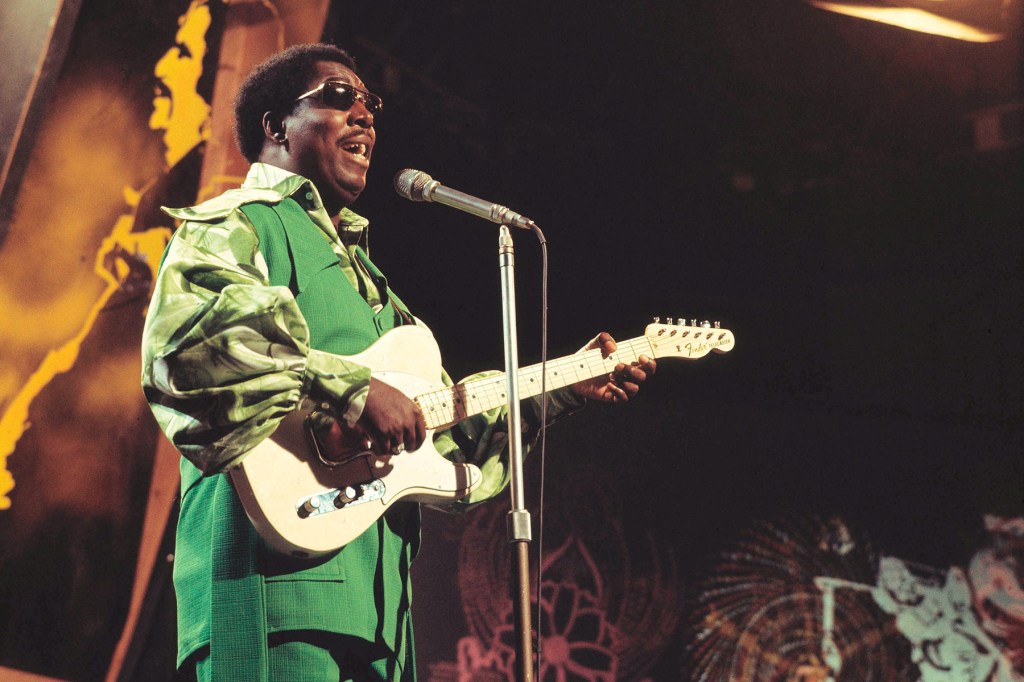
Clarence Carter, the blind Alabama-born singer and songwriter whose hard-earned, raspy voice could turn both heartbreak and lewdness into hits, has died at 90.
Bill Carpenter, a spokesman for Carter’s former wife and fellow singer Candi Staton, confirmed that Carter died Wednesday of natural causes.
Born in Montgomery, Alabama, Carter taught himself guitar and later studied music at Alabama State College. That combination of formal training and self-made instinct helped shape a career that could swing from the tender to the openly bawdy without sounding especially conflicted about it. His biggest commercial breakthrough came in 1970 with “Patches,” a pleading story-song about a poor Southern boy forced to take over the family farm after his father dies. The single rose to No. 4 on the Billboard Hot 100, and its parent album, Patches, became his highest-charting LP on the Billboard 200, reaching No. 44.
If “Patches” made Carter a mainstream presence, songs like “Strokin’” defined the other side of his legacy. The track is a funky, conversational sex song, the kind of record that was never going to survive as a commercial radio staple but found a long afterlife on nightclub jukeboxes. Eddie Murphy later used it in his 1996 remake of The Nutty Professor, a fitting reminder of how Carter’s music moved outside the usual adult-contemporary lanes. He also recorded “Making Love on the Dark End of the Street,” a similarly irreverent account of desire, along with other songs built around illicit romance, including “Slip Away,” which reached No. 6 on the Hot 100 in 1968, and “Back Door Santa.”
His catalog wasn’t just about provocation. On “The Road of Love,” Carter worked with Duane Allman, then still a little-known guitarist and session player before he went on to cofound the Allman Brothers Band and leave his mark on records by Eric Clapton, Wilson Pickett and others. Carter’s tougher-edged “Tell Daddy” later served as the basis for Etta James’ “Tell Mama,” another sign of how his songs circulated through the soul and blues ecosystem rather than sitting neatly in one lane.
Much of that work was cut at Fame Studios in Muscle Shoals, Alabama, the same place that housed sessions by Pickett, Aretha Franklin and other soul heavyweights. Later in his career, Carter recorded for the now-defunct Ichiban Records and through his own Cee Gee Entertainment, a path that reflected how many veteran soul artists kept working long after the industry had moved on from their first peak.
Carter and Staton were briefly married in the 1970s before divorcing. They had one son, Clarence Carter Jr.
In a 2012 interview with The Montgomery Advertiser, Carter spoke with the blunt fatalism that often ran through his work. “I don’t know how much longer I’m going to be going, but I’m going to keep going until something tells me it’s time to quit or Old Man Death comes to run me down,” he said.
Additional reporting by Katie Atkinson