Physical Address
304 North Cardinal St.
Dorchester Center, MA 02124
Physical Address
304 North Cardinal St.
Dorchester Center, MA 02124
Billboard ranks all 12 Chris Brown solo albums, from Graffiti to BROWN, with context on hits, risks and career-defining moments.
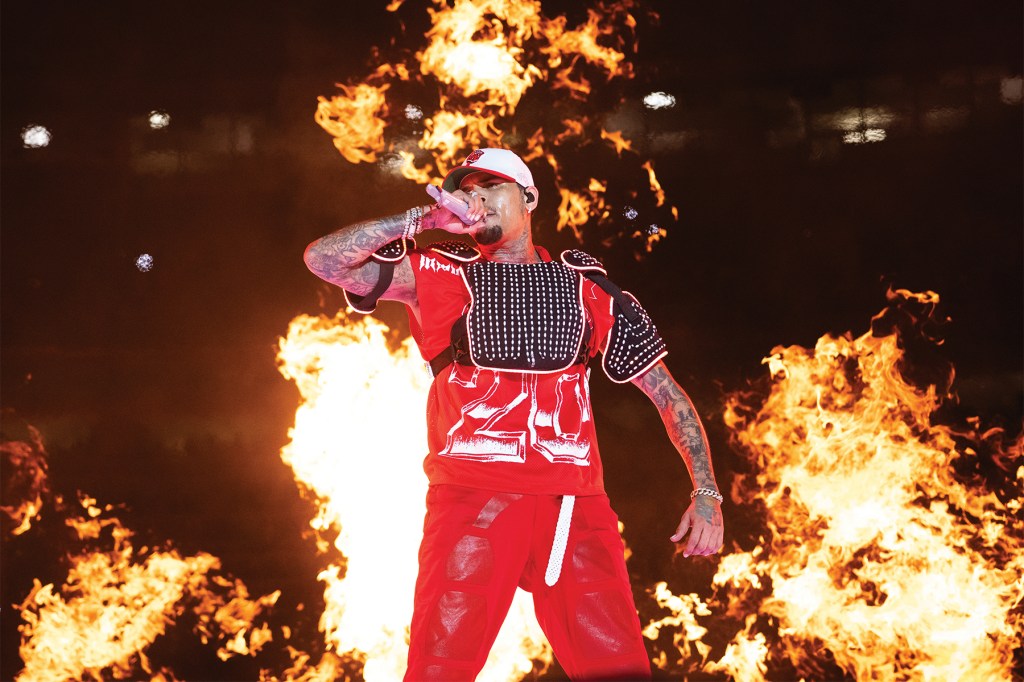
Chris Brown’s 12th studio album, BROWN, arrived on Friday, May 8, and the reaction was predictably split. Brown even answered some of the backlash himself. But the release is also a reminder of something that has held true for two decades now: the Virginia singer still occupies a stubbornly central place in R&B, even as his reputation remains impossible to separate from his catalog.
Since his 2005 self-titled debut, Brown has built a career on technical polish, sharp choreography, and a voice that has managed to stay instantly recognizable across eras of shifting pop and R&B trends. He has long since moved into stadium-headlining territory, with an upcoming run alongside Usher, and he has enough crossover hits to keep him present in both mainstream and fan-memory conversations. That tension, between commercial durability and personal controversy, is part of why his albums are still judged so intensely.
On Mother’s Day, Brown responded on Instagram to the mixed response to BROWN, a 27-track set. “Just wanna say thank you to everyone who listened to this album,” he wrote. “Been a lot of mixed reviews, and I can take my audience’s criticism and opinions.” He added, “The last 3 albums have came under the same scrutiny and it eventually grew on people. Thank you for even taking the time out to listen.”
That comment lands differently because Brown’s 2023 album 11:11 was not just another entry in the discography. It earned him his second Grammy at the 2025 ceremony and produced the Billboard Hot 100 top 40 hit “Residuals,” another sign that his records can still generate the kind of momentum they once did more routinely. With that in mind, Billboard’s ranking of all 12 Chris Brown solo albums feels less like a retrospective exercise than a snapshot of an artist whose legacy is still being negotiated in real time.
Below, the full ranking.
Graffiti arrived at one of the most precarious points in Brown’s career, following the massive commercial lift of Exclusive and carrying the weight of being a test case for what came next. It still opened respectably at No. 7 on the Billboard 200, giving him a third straight top 10 album in the U.S., but the record also signaled a restless, uneven push outward.
With Swizz Beatz, Polow Da Don, Ryan Leslie and The Runners among its producers, the album leaned into a more experimental blend of R&B, pop, rock and Euro-dance. Brown co-wrote most of it, and the result was a clear turn toward electropop and Eurodisco textures that separated it from his earlier work. The lead single, “I Can Transform Ya,” featuring Lil Wayne and Swizz Beatz, was first posted on his blog Mechanicaldummy.com and later climbed to No. 20 on the Billboard Hot 100 in its eighth week.
Hidden Gem: “So Cold”
Breezy, Brown’s 10th studio album, is the kind of record that keeps reaching for something bigger than it quite lands on. It pulls from trap, features from across the spectrum, and a handful of confessionals, but the overall shape is less striking than the ambition suggests. It was a cleaner break from the double-album sprawl that had defined some of his earlier releases, though not necessarily a stronger one.
Even so, the project still went gold and left behind a few undeniable moments. “Call Me Everyday” with Wizkid has a slow, patient glide to it, while “Hmhmm” stands out as one of the album’s more magnetic entries.
Hidden Gem: “Show It” feat. Blxst
Heartbreak on a Full Moon is Brown at his most overextended. The 45-song album was clearly meant to satisfy a fanbase that had already shown a high tolerance for length, but the sheer scale makes the listen feel more like a marathon than a statement. Still, there are a few songs that broke through the sprawl.
“Party,” with Usher and Gucci Mane, became a summer staple, while “Pills & Automobiles” found a lasting spot in Brown’s tour setlist. The ambition is hard to miss, but so is the strain of trying to carry that much emotional and commercial weight at once.
Hidden Gem: “Paradise”
Coming off the commercial surge of F.A.M.E., Fortune arrived with an odd aura around it, having once been teased at the 2012 BET Awards as Brown’s supposed final album. He leaned into the EDM wave of the early 2010s, working with David Guetta, Calvin Harris and Avicii-adjacent pop energy in a way that reflected the moment more than it defined it.
“Don’t Wake Me Up” and “Turn Up the Music” both cracked the Billboard Hot 100 top 10, confirming his instinct for a big single. But parts of the album get bogged down in brashness and repetitive romantic posturing. Even so, more than a decade later, Fortune still feels undervalued in the context of his catalog.
Hidden Gem: “2012”
If Brown’s intent on BROWN was to show growth, the album gives him some credit for trying. Across 27 tracks, he sounds more willing to account for his own flaws, at least in flashes, and there are songs that aim for sincerity rather than reflex. “Fallin” with Leon Thomas is one of the more soulful performances of his career, while “Theme Song” reads as a nod to a ladies-night-out lane he has always understood.
“Slow Jamz” with Lucky Daye is the album’s cleaner bedroom record, and “#BODYGOALS” with Tank feels built for the gym as much as the charts. The whole thing is uneven, but not without moments that explain why Brown still has a command of the room when he wants it. As one critic put it, the album is “comparable to a night Russell Westbrook scored 30 points, but needed 25 shots to do so.”
Hidden Gem: “Something in the Water”
11:11 could have climbed higher, and for some listeners it probably will. But at 22 songs, and 35 on the deluxe edition, it is simply too much album to take in cleanly. That bulk works against it, even if the opening stretch suggests a more focused Brown than usual.
“Angel Numbers/Ten Toes” sets the tone well, and “Sensational” with Davido and Lojay brings a welcome international flair. The real sweet spot comes with “Press Me,” “Feel Something” and “Best Ever” featuring Maeta, a three-song run that captures why Brown still matters in contemporary R&B, even when his records test your patience.
Hidden Gem: “Press Me”
Indigo is the kind of double album that works against itself by trying to be all things to all listeners. At 32 tracks, it is difficult to move through in one sitting, but commercially it paid off, giving Brown his most recent No. 1 on the Billboard 200.
The album’s biggest strengths are obvious: “Undecided” and “Heat” kept him in the top 40 lane, while deeper cuts like the apologetic “Sorry Enough” and “Don’t Check on Me,” with Justin Bieber, gave the set some range. The biggest moment, though, was “No Guidance,” Brown’s reunion with Drake after their feud, which reached the Billboard Hot 100 top five and became his highest-charting lead-artist single in more than a decade, since “Forever.”
Hidden Gem: “Sorry Enough”
The cover art for Royalty, with Brown holding his daughter, still feels a little at odds with the album underneath it. But once past that disconnect, the record reveals itself as one of his stronger and more understated LPs. Brown has never been shy about bedroom records, and “Back to Sleep” fits squarely into that lineage, but the album has more going on than that alone.
From the opening synths of “Liquor” to the talk-box details threaded through “Zero,” Royalty finds Brown leaning into sounds outside his usual comfort zone while still sounding fully like himself. It avoids the cringe that weighed down much of early-2010s EDM crossover work and instead lands as a surprisingly nimble entry in the catalog.
Hidden Gem: “Make Love”
Exclusive is what a strong sophomore album should look like: bigger hits, visible growth, and no real sense of hesitation. Coming off a debut that had already made him a star, Brown was moving at full speed by 2007, and the album finds him cresting at the top of R&B without losing the easy confidence that got him there.
“Kiss Kiss” with T-Pain is still one of the sharpest singles of its era, while “Take You Down” remains a standard-bearer for Brown’s sensual side. Elsewhere, “With You” and the Lil Wayne-assisted “Gimme Whatcha Got” show him moving between tenderness and swagger without losing momentum.
Hidden Gem: “Down” feat. Kanye West
Brown was 16 when he released his self-titled debut, but the project plays with the certainty of an artist who already understood the mechanics of stardom. It peaked at No. 2 on the Billboard 200, went triple-platinum, and introduced one of the defining male R&B voices of the 2000s.
“Run It!” made him the first male artist to debut at No. 1 on the Billboard Hot 100 with a debut single, and that alone would have made the album a landmark. But it also delivered “Yo (Excuse Me Miss),” “Say Goodbye,” “Gimme That (Remix)” with Lil Wayne and “Poppin’,” a run that explains why the record still feels foundational in Brown’s story.
Hidden Gem: “Ain’t No Way (You Won’t Love Me)”
X captures mid-2010s R&B as well as any Brown album. “Loyal” was a cross-format hit in every sense, helped along by a parade of regional remixes that pushed it back into the Billboard Hot 100 top 10. Around it, Brown keeps jumping between lanes: the Usher and Rick Ross-assisted “New Flame,” the club pressure of “Fine China,” and the more reflective corners that make the album feel tied to a particular moment in his life.
What gives X its weight is the way it balances bravado with vulnerability. “See You Around” carries real remorse, while “Autumn Leaves” and “Drunk Texting” let more exposed emotions surface. With less than 20 tracks on the standard edition, Brown manages to make an album that feels more than just a bundle of hits. It is one of the clearest statements in his catalog.
Hidden Gem: “Lady in a Glass Dress (Interlude)”
“Chris” from the source article continues here as F.A.M.E. would naturally sit at the top of the ranking, the point where Brown’s commercial instincts, club instincts, and pop reach all seemed to hit at once. It remains one of the clearest examples of his ability to make a hit-heavy album that still felt alive as a full project, not just a stack of singles.
F.A.M.E. marked a moment when Brown’s music was doing the heavy lifting for his public image, even if only temporarily. The album’s impact was immediate, and its songs helped define the era around it in a way few later projects managed to replicate.