Physical Address
304 North Cardinal St.
Dorchester Center, MA 02124
Physical Address
304 North Cardinal St.
Dorchester Center, MA 02124
In a Vogue behind-the-scenes clip, LISA straps into mannequin-like prosthetic arms by Robert Wun as part of a sculptural Met Gala look. The final white veil, balanced by the extra limbs, made for a theatrical but physically demanding statement at the Costume Art-themed event.
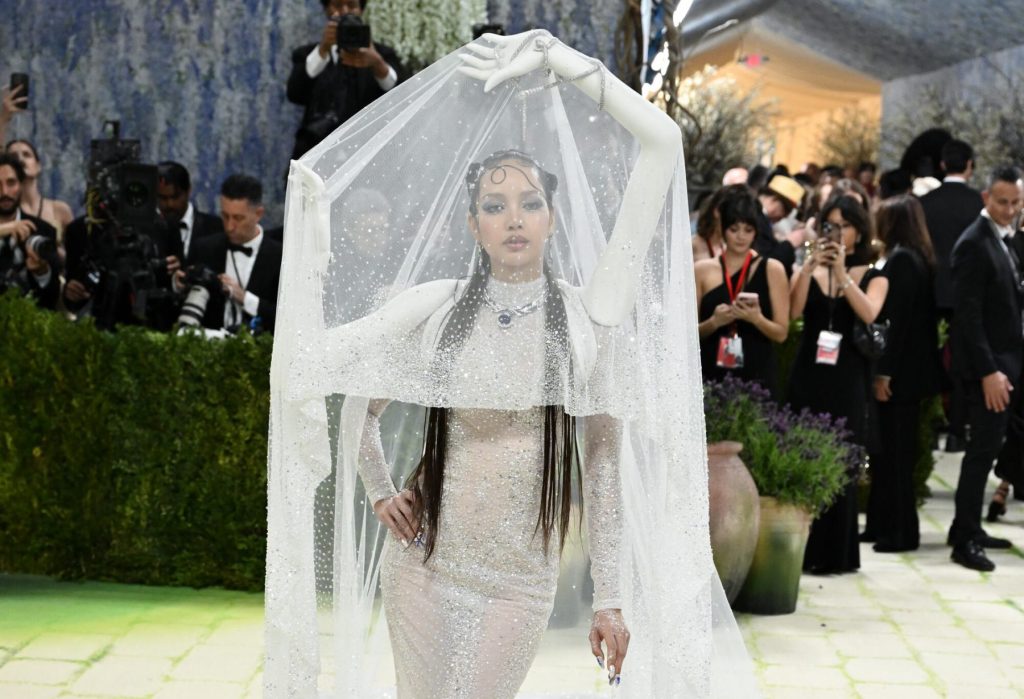
The scene in the Vogue video is intimate in a way the red carpet rarely is: a small room, a stylist fussing, a designer adjusting silicone seams, and LISA testing balance and breath against an improbable accessory. This was not a dress rehearsal in the usual sense. It was the final fitting, the day before the Costume Art themed Met Gala, and the singer was literally putting on extra limbs.
Robert Wun, the London-based designer who has become a frequent collaborator for performers who want their clothes to read like stage props and sculptures, worked from a 3D scan of LISA’s body to create two white, mannequin-like arms that attach to her back like a sculptural backpack. The footage shows them sliding the arms on, clipping harness straps, then threading rings, bracelets and a tiny pearl cuff through the artificial fingers. The prosthetics are deliberately uncanny: glossy but human-sized, with fingernails you could put jewelry on.
“I am nervous for tomorrow, because my extra arms are really heavy,” LISA says in the clip. “He said it’s 1.8 kilo, but I don’t think so. I think it’s heavier than that – but I have to fight through it.”
That physical complaint matters. It highlights how much of modern celebrity dressing is about engineering as much as aesthetics. The final triumph on the Metropolitan Museum carpet on May 4 was a sheer white veil held up, eerily, by those spare arms. On camera, the extra limbs appear to breathe with her as she poses; in person they must have altered how she stood, how she turned, where her gaze could go. The look read as theatrical — not the inoffensive kind, but the kind that asks an audience to reconcile a human body with something deliberately augmented.
Vogue posted the behind-the-scenes clip on May 5, but the work itself was done a day earlier. LISA and Robert Wun experimented with placement, ornamentation and balance until the veil sat properly and the harness disappeared under fabric. LISA made a small joke about not wanting to trip, and she kept the humor in spite of the rigging. The device reportedly weighed around 1.8 kilograms according to their conversation, though she was unconvinced.
All four BLACKPINK members attended the gala, though they chose to arrive separately. For LISA, this was her second Met Gala; the event this year circled costume as an art form, asking celebrities to treat their bodies as a canvas or a frame. For K-pop stars, who have long used fashion as part of narrative and performance, the Met is becoming another stage — a place to test how far spectacle can be pushed while maintaining a trademark polish.
There is a practical through line here worth noting: K-pop’s global export machine trains its performers to be both music makers and visual narratives. LISA, who has moved between solo records, high-profile endorsements and acting cameos in Western productions, embodies that cross-continental career. Her acceptance of a look that could limit movement says something about how fashion functions in service of image now. It is choreography expanded to costume; it is sculpture that must be worn and lived in for hours.
Seen against the Met’s history of theatrical moments, the four-armed illusion is neither the most outlandish nor the most humble. It sits somewhere between stage trick and museum piece. There is a lineage — from avant-garde designers who suited models in built objects to pop stars who have used prosthetics and wings for spectacle — and LISA’s iteration feels particularly contemporary because it is modest in color but maximal in concept. White, minimal, and designed to make you read the body differently.
What this matters for her career is simple: it keeps LISA in a liminal space where music, fashion and performance blur. The image of her propped by extra arms will circulate differently than any single; it is fodder for fashion critiques, for meme cycles, and for a visual culture that rewards memorable silhouettes. It is also an assertion that K-pop artists will not only attend Western institutions but actively reshape the conversation there, bringing a practiced sense of staging and costume that is rarely accidental.
Watch LISA transform into a four-armed human work of art below.