Physical Address
304 North Cardinal St.
Dorchester Center, MA 02124
Physical Address
304 North Cardinal St.
Dorchester Center, MA 02124
Mike Marino, the prosthetic artist behind Bad Bunny’s aged Met Gala look, explains the craft, pressure, and cultural shift that now makes cinematic transformation central to pop music image-making.
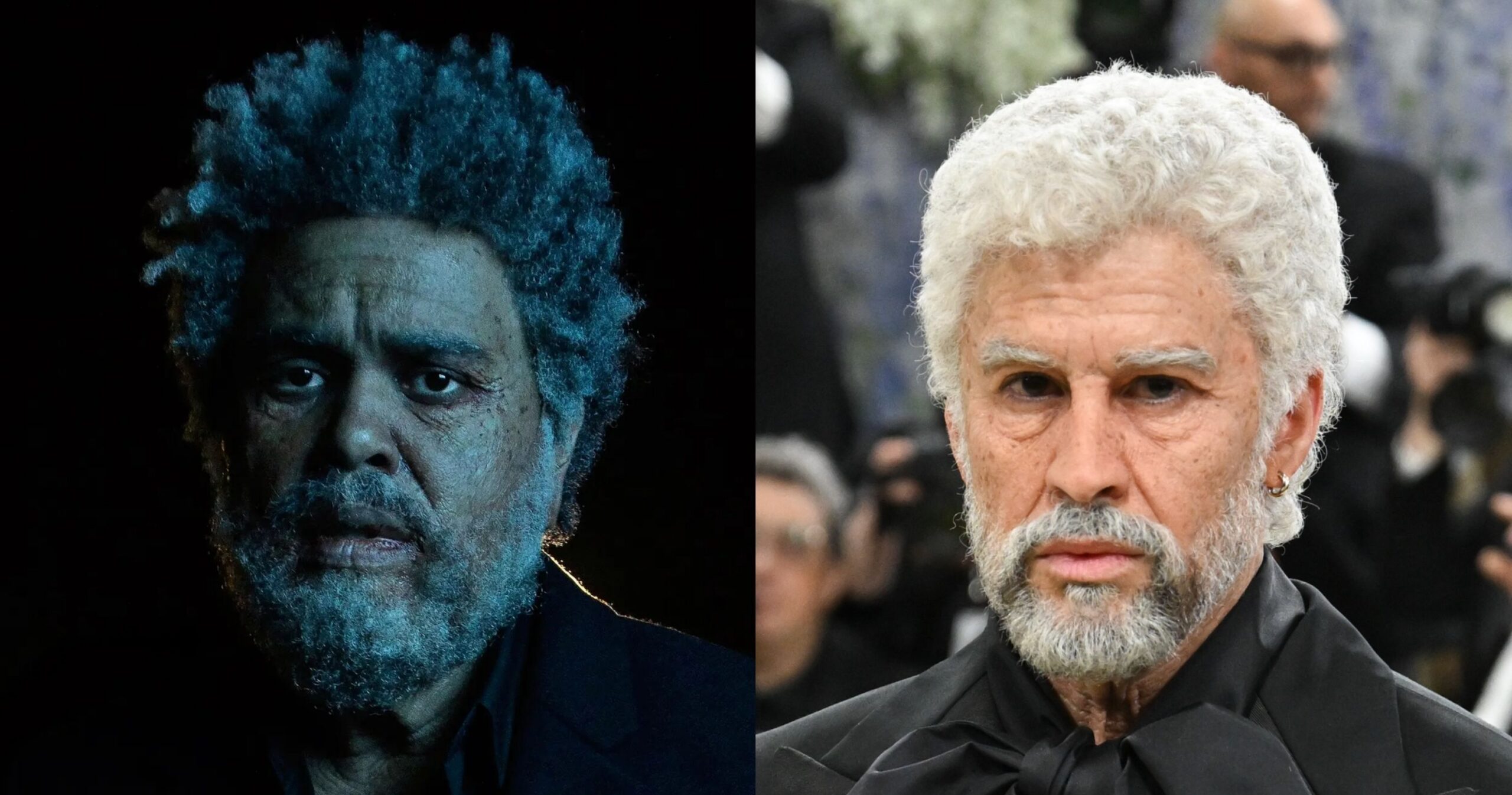
When Bad Bunny stepped onto the 2026 Met Gala carpet on Monday, he didn’t look like he’d just arrived from a hotel suite in Manhattan. He looked like he’d walked out of another decade entirely. For the night’s “Fashion Is Art” theme, the Puerto Rican star appeared in painstaking old-age prosthetics: tiny liver spots, deepened wrinkles, and thick gray brows that gave him the presence of a museum portrait subject rather than a pop icon mid-career.
The illusion came from Mike Marino, a veteran self-taught prosthetic makeup artist whose work has shaped some of the most recognizable music and pop-culture images of the last decade. Marino has credits on more than 100 films, but for music audiences he is often associated with the Weeknd’s face-altering visual arc and Heidi Klum’s annual Halloween transformations. His style is less about shock for its own sake and more about believable character work, even when the concept is extreme.
Speaking by phone after the gala, Marino described a process that started months earlier. Bad Bunny’s team approached him with a concept already in mind, and Marino traveled to Miami for a full 3D laser scan of the artist’s head and face. From that scan, he built and sculpted the aging design, then cast silicone pieces tinted to match Bad Bunny’s skin tone from the inside out. “I didn’t make him look too crazy,” Marino said. “He was supposed to look like an older person, not a zombie. It’s the Met Gala, he’s gotta look handsome.”
The day-of execution took roughly three hours, with details layered by hand: airbrushed freckles, capillaries, liver spots, and subtle color variation that reads naturally under flashes and live video. Marino’s team also applied custom facial hair, brows, and a full wig, each piece laid and blended with fine lace. In photos, the look held up under the unforgiving conditions that usually expose prosthetic shortcuts.
Marino framed the concept less as gimmick than as portraiture tied to the event’s setting. He said the inspiration drew from older paintings and the idea that aging itself carries artistic value. In that interpretation, Bad Bunny wasn’t in costume so much as rendered as an older statesman version of himself, almost like a figure from the museum walls stepping into the present tense.
That level of control is harder at the Met than on a film set. Marino compared the contrast directly: in movies, there is time for corrections and continuity checks; on a live carpet, there are no second takes. “A surgeon wants quiet and peace and perfect temperature,” he said. “I’m walking into a party zone and doing surgery in front of 30 people.”
His operation scale reflects how central transformation has become to contemporary music image-making. Between Bad Bunny’s look and another major Met project with Klum, Marino said about 40 people were involved across departments, including hairpiece specialist Diana Choi, hairstylist Carla Farmer, and makeup assistant Kevin Kirkpatrick. The labor is invisible by design, but it is increasingly foundational to how big music personalities stage narrative moments in public.
That same logic has defined Marino’s collaboration with the Weeknd, whose recent visual eras used prosthetics as serialized storytelling tools rather than one-off stunts: the bruised face at the 2020 VMAs, bandages and cosmetic-surgery satire around “Save Your Tears,” and later old-age work connected to Dawn FM. Marino said the artist initially contacted him directly and brought a genuine interest in practical effects and film language.
The larger takeaway from Bad Bunny’s Met appearance is that prosthetic makeup now functions as authorship in pop, not just styling. It can age an artist forward, bend identity, and create a character that lives across photos, memes, and fan theory in real time. As Marino put it, the medium is temporary: “like sidewalk art,” beautiful as long as the weather holds. At an event built on spectacle, his work made a strong case that craft still matters most when everyone is looking closest.
“Live events, you can’t fix anything.”