Physical Address
304 North Cardinal St.
Dorchester Center, MA 02124
Physical Address
304 North Cardinal St.
Dorchester Center, MA 02124
In a Los Angeles courtroom on May 5, Jason Derulo and a lawyer for session guitarist Matthew Spatola sparred over whether Spatola's April 2020 guitar parts on Savage Love amounted to creative authorship or mere performance. The trial hinges on melody origin, missing work-for-hire paperwork, and pand
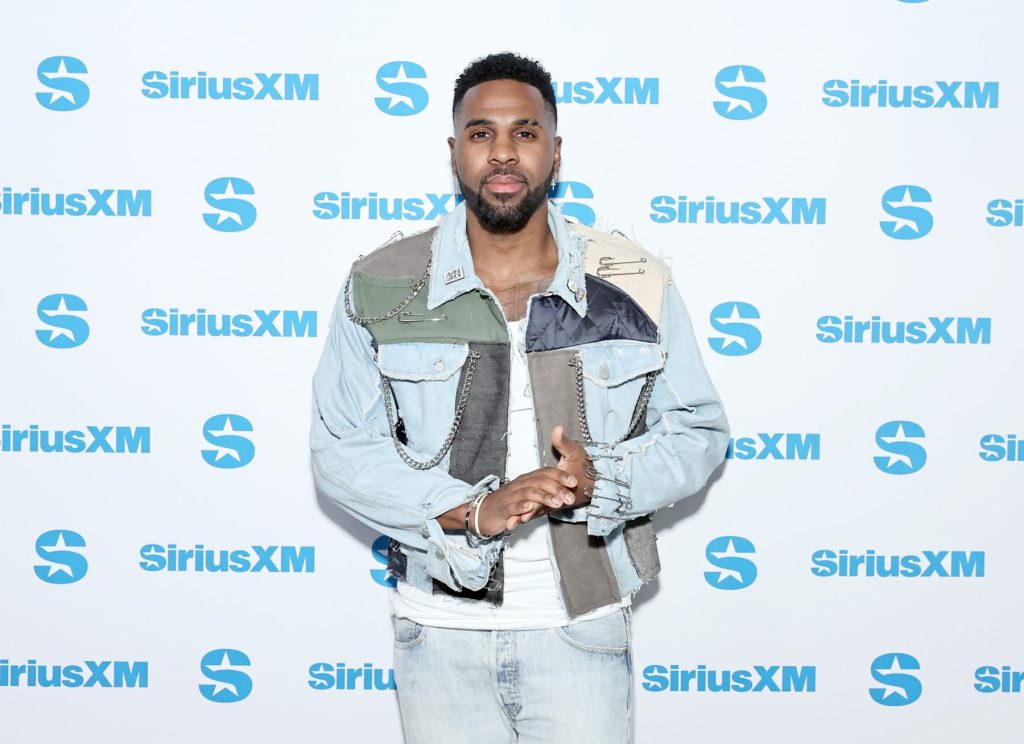
The exchange in a downtown Los Angeles courtroom on May 5 felt less like a legal seminar and more like a terse studio session replayed in slow motion. Jason Derulo, who rode a viral 2020 beat to the top of the Hot 100 with the help of a BTS remix, fielded pointed questions from the lawyer for Matthew Spatola, a session guitarist who says he deserves songwriting and producing splits on Savage Love.
What had been a relatively tidy narrative in headlines — a TikTok instrumental by Jawsh 685, Derulo’s topline and then a No. 1 — unraveled into technical minutiae about melody, instrumentation and the paperwork that often gets neglected when a song is being finished in a rush. The core dispute was simple: did Spatola’s performance amount to creative authorship, or was he a hired hand whose contribution did not change the underlying composition?
During direct testimony last week, Derulo said Spatola ‘played a beautiful guitar and bass’ but ‘created absolutely nothing’ for the track. Under cross-examination by Spatola’s counsel Christopher Frost, that assertion was pried open. Frost repeatedly asked whether Derulo thought anyone who contributes creatively to a song should receive writing credit. Derulo’s reply — that he loves giving people their just due and that he would have given credit if Spatola had created the melody — carried as much defensive care as concession.
Frost kept circling the gap between a synth guitar in the original source and the organic guitar Spatola recorded in April 2020, asking whether the presence of a re-recorded part could elevate a player to co-creator. Derulo stuck to the view that the melody preexisted in Jawsh 685’s ‘Laxed – Siren Beat’ and that Spatola re-played it on organic guitar.
The back-and-forth revealed how narrow the legal questions can be when the creative process is compressed. Frost asked flatly whether Spatola ‘delivered organic guitar, yes or no.’ Derulo answered that the melody existed and that Spatola had reinterpreted it acoustically. That distinction matters: is a reinterpretation that changes timbre or feel a new creative element, or is it a performance of someone else’s melodic content?
Paperwork, predictably, became a proxy for intent. Session musicians are routinely asked to sign work-for-hire agreements that explicitly bar claims to authorship. Spatola never signed such a document. Derulo told the court that his business team normally handles agreements and that the lack of a signed form on this session was partly a product of the pandemic. The recording happened amid quarantine restrictions in April 2020, he said, and the usual administrative chain was not in place. Instead of a contract, the post-session communication was a text from Derulo to Spatola reading ‘1K good each day?’
That casualness — an offer of payment rather than a formal release of rights — is exactly the texture that makes these cases complicated. The music business has long relied on informal exchanges in studios, but the streaming era and the high stakes of global hits have made those informals potentially ruinous. If a session player can point to a distinctive melodic or production contribution, labels and artists suddenly face upstream claims on royalties that ripple through co-writing credits, publishing splits and producer fees.
There’s also an industry pattern here. High-profile disputes over songwriting and production credits have become a regular feature of the legal landscape, and they force a reassessment of what counts as authorship in contemporary pop, where producers, beatmakers and session players often build on preexisting loops, samples and beats. The Jawsh 685 beat that underpins Savage Love was a public, circulating piece of music that Derulo adapted; whether the addition of organic guitar reshapes that origin is the jury’s call.
The trial was scheduled to wrap on May 6, with closing arguments and then juror deliberation. The immediate legal stakes are, of course, monetary and contractual. But there is a larger cultural yardstick at work: the case tests the boundaries between performance and composition in a landscape where a single TikTok snippet can germinate a global hit, and where the people who add texture and humanity to a track may or may not receive recognition for changing its character.
Watching the testimony, you could see why both sides feel justified. Derulo, with chart history and a hit single to protect, frames the matter as fidelity to an original melody and the practical realities of a pandemic-era session. Spatola, represented as the scrappy session player who might have altered the song’s sonic identity, presses the point that a played part can be more than an execution of notes; it can be a contribution that reshapes a track.
Whatever the jury decides, the dispute will likely be read as another case study on how the music business assigns value. Artists and their teams will take notes: be explicit about agreements even in chaotic moments, and recognize that an acoustic take recorded in a socially distant garage can become evidence months or years later. For session players, the case underscores the thin line between being a hired hand and being a credited creator — and how critical it is to secure clarity before hard work becomes the subject of a lawsuit.