Physical Address
304 North Cardinal St.
Dorchester Center, MA 02124
Physical Address
304 North Cardinal St.
Dorchester Center, MA 02124
Linda Perry will receive the Ivor Novello special international songwriter prize on May 21 at London’s Grosvenor Hotel. The award acknowledges her transition from 4 Non Blondes frontwoman to a songwriter behind Christina Aguilera's "Beautiful," P!nk and Gwen Stefani hits.
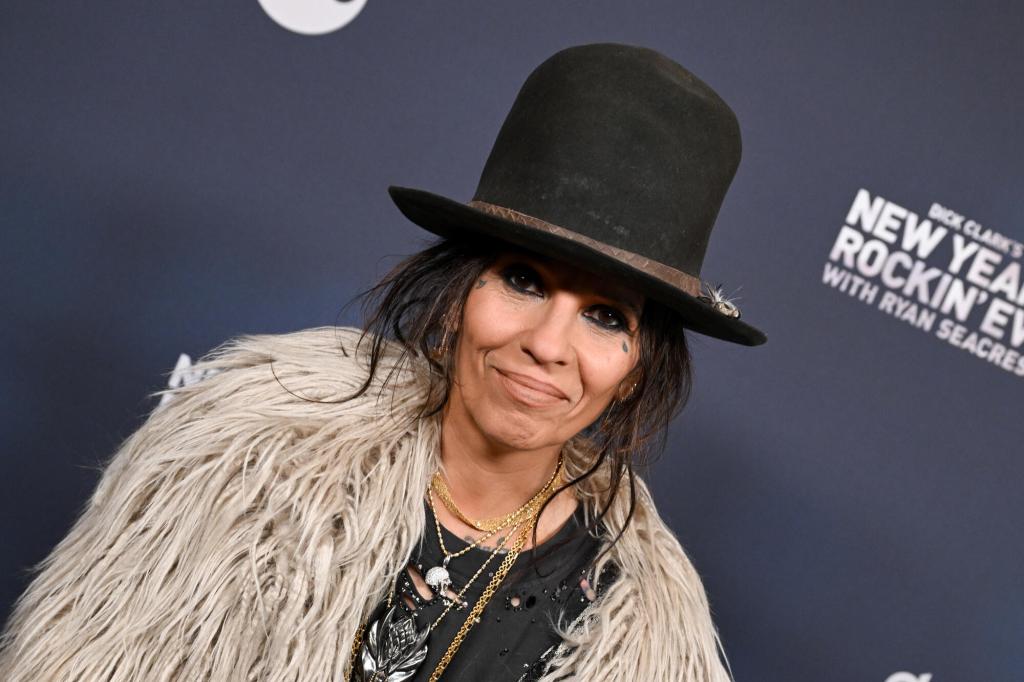
Linda Perry will be handed the special international songwriter prize at the Ivor Novello Awards ceremony in London on May 21, a compact, somewhat old-school venue choice — the Grosvenor Hotel — for an honor that nods to a career the industry keeps rediscovering.
Perry’s arc is familiar to anyone who tracks late-90s and early-00s pop: a frontwoman-turned-behind-the-scenes force whose melodies and production fingerprints turned into some of the era’s most durable radio fixtures. She first made a public imprint as the lead singer of 4 Non Blondes and their anthem that many still misremember by title; she then recast herself as a writer and producer for huge pop stars. Her credits read like a map of mainstream pivot points: Christina Aguilera’s “Beautiful,” Gwen Stefani’s “What You Waiting For?,” and P!nk’s “Get the Party Started,” to name a few. She has also worked with Adele, Ariana Grande and Celine Dion, moving through genres without losing a distinctly blunt, melodic sensibility.
There is an element of ordination in the Ivors’ choice: the Ivors Academy prizes are voted on by peers, and the special international award often feels like a midcareer catalogue assessment as much as an accolade. The most recent recipient was Brandon Flowers; Bruce Springsteen presented that prize in person — a ceremonial moment that illustrated how these awards stitch older and newer pop narratives together.
“It’s an honor to be recognized for my songwriting contributions at the 71st Ivor Novello Awards. So many incredible artists have been celebrated, and I am humbled to be standing alongside them,” Perry said in a statement.
Roberto Neri, CEO of the Ivors Academy, framed the pick in institutional terms: “Linda Perry’s songwriting continues to have a profound impact on global popular culture. We are proud to honor her with the special international award at The Ivors, celebrating her incredible music and authentic craft.” The language is standard for these occasions, but it points to what matters here: craft assessed over decades, not momentary chart spikes.
This particular Ivors slate also gives a sense of the academy’s broader reach. On April 29 the organization confirmed Rosalía as international songwriter of the year for LUX, an album that drew attention for its linguistic and stylistic range. Back in March, nominations highlighted a domestic field that skewed young and politically adroit — Olivia Dean, Lily Allen, Kae Tempest and Wolf Alice were among those with multiple nods.
For Perry, the Ivors prize is less about a single song and more about the accumulation of moments where a simple melodic decision altered a mainstream artist’s trajectory. Three of her five Grammy nods have been for songwriting: song of the year nominations for Aguilera’s “Beautiful” and for co-writing Alicia Keys and Brandi Carlile’s “A Beautiful Noise,” as well as a nod for best song written for visual media for the Dolly Parton co-write “Girl in the Movies.” Those entries underline how she has migrated across pop’s various institutional measures — radio charts, awards shows, soundtrack placement — while retaining a recognizable musical voice.
There is also a slightly awkward cultural tension to honor a writer whose most visible early work came from a band with an outspoken, anti-industry posture. Perry’s transition to behind-the-scenes hitmaking complicates the narrative many critics prefer: star rebels often become the very apparatus they once mocked. That she did so without becoming invisible — you can still hear the ragged vulnerability of her early vocal performances echoed in the textures she builds for other artists — is part of why this feels like an earned recognition rather than a routine lifetime award.
Expect a compact ceremony, the kind the Ivors have used in recent years to emphasize the songwriting community rather than spectacle. Perry collecting the trophy at the Grosvenor will be read as both a personal milestone and a reminder: pop authorship often happens away from the microphone. The academy’s peer-based selection process matters here: it indexes respect from other writers and composers, and in that world, sustained, adaptable craftsmanship is its own kind of currency.