Physical Address
304 North Cardinal St.
Dorchester Center, MA 02124
Physical Address
304 North Cardinal St.
Dorchester Center, MA 02124
mgk tells Chris Garza he "punched back" after Corey Taylor struck him, recounting the 2021 feud, a pulled Tickets to My Downfall feature, and repaired friendships.
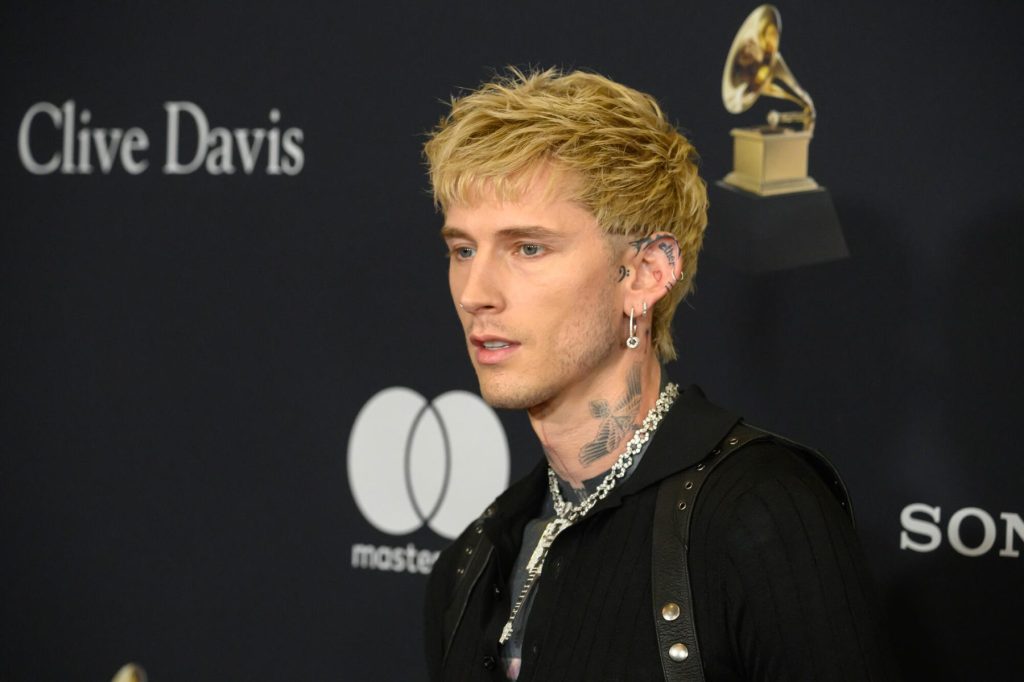
mgk opened the conversation bluntly on Suicide Silence guitarist Chris Garza’s podcast on Tuesday, May 5: “What do you do if someone punches you in the face?” He answered his own question shortly after—”I got punched in the face and I punched back, and that’s crazy?”—and spent the episode tracing how a friendship and a career slight turned into a public scrap that dates back to 2021.
The exchange is notable more for what it reveals about how cross-genre moves and personal pride collide in contemporary rock culture. mgk framed the incident as a simple reaction to provocation, not a manufactured celebrity feud: he insists he “has no remorse” for responding the way he did, and repeatedly returns to the literal image of a punch as the origin point.
He stressed that the fallout touched other relationships. Before the split, mgk says he was close with Slipknot’s DJ Sid Wilson, a rapport that was strained by the broader hostility but has since been repaired. “Now me and Sid are back cool. And Corey and I haven’t had a chance to speak,” mgk told Garza. “We were both tripping.”
At the center of the tension is a collapsed collaboration: mgk says he invited Corey Taylor to contribute a verse to the deluxe version of his 2020 album Tickets to My Downfall—specifically the song “Can’t Look Back.” “I said, ‘I think it would be really cool to see you do this type of verse on this song,’ as a fan,” mgk recalled. He compared that hoped-for interaction to the one he had with Fred Durst of Limp Bizkit, whose recent collaboration with mgk, “Fix Ur Face,” just topped Billboard’s Hot Hard Rock Songs chart.
According to mgk, Taylor balked and ultimately pulled out: “He was just like, ‘Oh, that’s not what I want to do, so I’m gonna just opt out of the record.'” After Tickets to My Downfall landed and found success, Taylor publicly criticized artists who switch genres, implying some do so because they “failed,” and closed the remark with “I think he knows who he is.” That remark, mgk says, felt like being kicked after the fact.
The back-and-forth spilled into live performance during Riot Fest, when mgk took aim at Taylor onstage: “You wanna know what I’m really happy that I’m not doing? Being 50 years old wearing a f—ing weird mask on a f—ing stage, talking sh–,” he told the crowd at the time. On Garza’s podcast, mgk shrugged at the escalation: “Like I said, it’s a punch in the face, what’re you gonna do? You punch back.” He added, pointedly, “It’s the same thing Corey would’ve done.”
There are few illusions about reconciliation yet. mgk said he and Taylor “haven’t had a chance to speak,” though he also made space for a complicated fandom: he still counts himself a Slipknot fan but reiterated that he “did not appreciate what happened.”
Aside from the personal elements, the episode reads like a moment of inventory for mgk’s rock-era identity. The anecdote ties together his transition from rap to pop-punk, the collaborative networks he inhabits, and the way genre gatekeeping can produce very public ruptures. It also underlines how quickly an invitation intended as admiration can be recast as provocation once pride and public performance are in play.
Image: mgk at the Pre-Grammy Gala on January 31, 2026 in Los Angeles, California. Earl Gibson III/Deadline
Watch the full Garza Podcast episode below.