Physical Address
304 North Cardinal St.
Dorchester Center, MA 02124
Physical Address
304 North Cardinal St.
Dorchester Center, MA 02124
Four songwriters sued NewJeans, ADOR and HYBE over alleged copying in 2024 hit "How Sweet," seeking royalties and credit for a submitted demo.
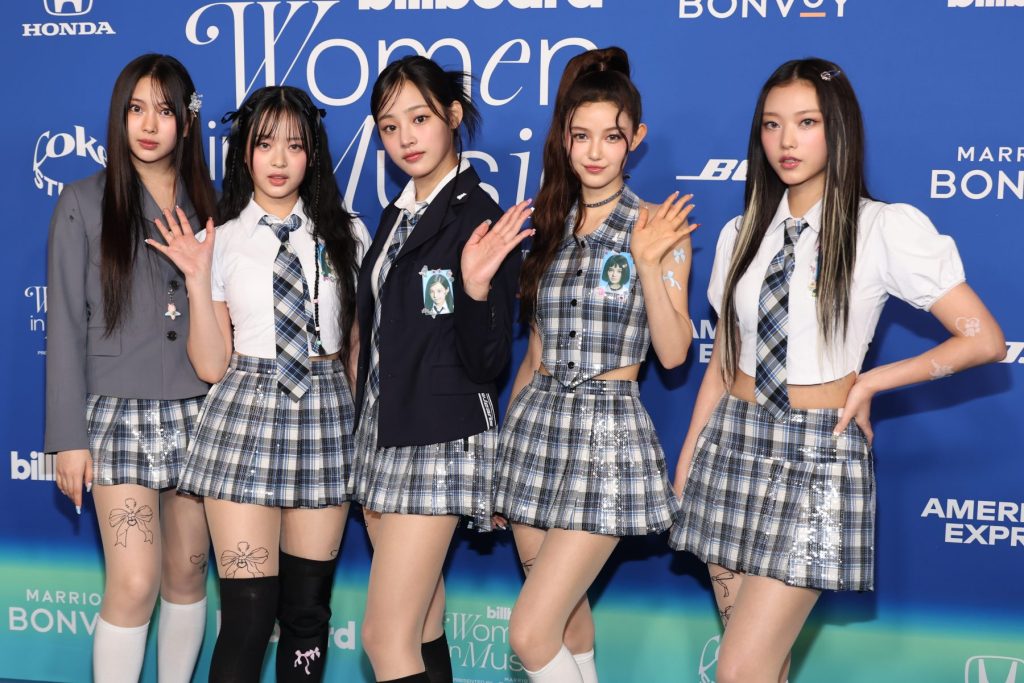
The most consequential development in NewJeans’ fraught 2024 has nothing to do with contracts or comebacks: a May 7 lawsuit filed in the U.S. accuses the K-pop group and their label partners of lifting core material from an outside demo when crafting their hit single “How Sweet.” The plaintiffs are seeking a share of royalties from a song that reached No. 15 on the Billboard Global 200 and No. 7 on the Billboard Global Excl. U.S. chart.
Hyein, Hanni Pham, Minji, Danielle Marsh and Haerin of NewJeans attend the 2024 Billboard Women In Music at YouTube Theater on March 06, 2024 in Inglewood, California. Amy Sussman/Getty Images
Obtained and first reported by Billboard, the complaint names ADOR, its parent company HYBE, and the five performers who have been part of NewJeans since 2022: Minji, Hanni, Haerin, Hyein and Danielle. The suit comes from four songwriters — Audrey Armacost, Aidan Rodriguez, Adam Gokcebay and Michael Campanelli — who say their demo, titled “One of a Kind,” was submitted during NewJeans’ songwriting process in January 2024 and later reflected in “How Sweet.”
According to the filing, Armacost’s publisher sent an instrumental to her in January and invited topline submissions. Armacost and the three co-writers say they recorded “One of a Kind” over that instrumental and forwarded it for consideration, only to be told their submission was not selected. When NewJeans released “How Sweet” four months later, the plaintiffs say the two songs shared substantive melodic and structural elements.
The suit is precise about the musical similarities it alleges. “Both works are in 4/4 meter and the key of B flat minor,” the complaint states, and claims both pieces contain “a topline that includes an approximately eight-bar, 31-note melodic sequence consisting of four series.” The plaintiffs describe the first verse of “How Sweet” as “quantitatively and qualitatively similar” to that same section of their demo.
“Plaintiffs, as joint authors and co-owners of the composition of ‘How Sweet,’ are entitled to their pro rata share of the profits that defendants have each gained from the exploitation of ‘How Sweet,'” the complaint reads.
The four writers allege HYBE, ADOR, the NewJeans members and a number of associated collaborators and distributors violated their rights by failing to license the demo. Through the lawsuit, they are seeking a portion of the proceeds generated by the “great commercial success” of the song.
Trevor Barrett, a lawyer for the songwriters, told Billboard: “Adam, Aidan, Audrey and Michael are accomplished songwriters who were deeply disappointed to discover this blatant copying of their original song, ‘One of a Kind,’ in New Jeans’ ‘How Sweet.’ They look forward to having their rights acknowledged and vindicated via this lawsuit.”
Representatives for HYBE did not immediately respond to requests for comment on the allegations.
This legal action arrives while NewJeans and ADOR continue to untangle their own disputes. In 2024 all five original members attempted to leave ADOR and perform independently under the name NJZ after the controversial dismissal of ADOR’s former CEO and creative lead Min Hee-jin. That move sparked litigation of its own; in October a South Korean court ruled the members must remain under exclusive contract with ADOR until 2029.
After the ruling, Hanni, Haerin and Hyein chose to return to ADOR and resume work with the label. ADOR announced in December that Danielle would not be part of NewJeans going forward, alleging a family member of hers bore “significant responsibility for causing this dispute.” Minji’s status remains unresolved; The Korea Herald reported this week that talks over her possible return are progressing in a “positive direction.”
The new lawsuit layers on another legal headache for a group already navigating internal exits, public scrutiny and a high-profile court battle. Beyond the immediate financial stakes, the case underscores a recurring pressure point in contemporary pop: how the influx of external demos, writers and rapid songwriting sessions can create contested authorship when a song goes big.
For NewJeans, who have rapidly accrued global charts and mainstream attention since their debut, the suit threatens to complicate both their catalog and their narrative at a moment when the group is attempting to steady itself after months of upheaval. For the writers, it is an attempt to have those alleged connections acknowledged in court and reflected in the song’s revenue streams.
As this matter proceeds, it will be watched not just for its resolution but for what it reveals about the role of submitted demos in K-pop production pipelines — and how disputes over those submissions are litigated in the transnational pop industry.