Physical Address
304 North Cardinal St.
Dorchester Center, MA 02124
Physical Address
304 North Cardinal St.
Dorchester Center, MA 02124
Noah Kahan’s The Great Divide arrived April 30 and debuted at No. 1, setting modern-era vinyl and streaming records while turning a quiet development arc into stadium scale.
Noah Kahan’s The Great Divide opened at No. 1 on the Billboard 200 with 389,000 equivalent album units after its April 30 release — a launch that not only marks his first chart-topper but also rewrites several modern-era records: the third-biggest week for any artist this year, the largest streaming week of 2024, the biggest week for a rock album since 2014, and, at 118,000 vinyl units, the biggest vinyl sales week for a rock LP in the modern era (dating to 1991).
Those raw numbers are the clearest measure yet of what felt inevitable after Stick Season turned into the breakout moment Kahan had been building toward for nearly a decade. Where early career developments once unfolded slowly, the last 12 months have condensed into a sudden and uncommon scale-up: a top-10 Hot 100 entry for “Stick Season” (peaking at No. 9), a new title track that climbed to No. 6, a Netflix documentary and a stadium tour that sold out — all nested inside a single album cycle that landed every one of The Great Divide’s 21 tracks on the Hot 100, making Kahan only the 13th artist to chart that many songs at once.
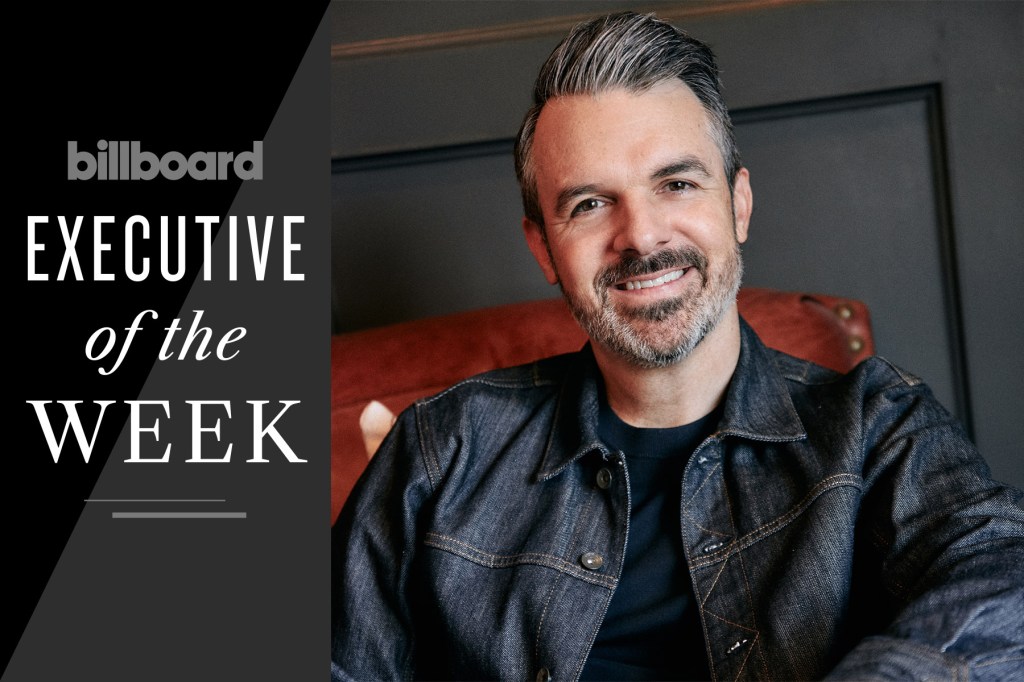
Those milestones, and the methods behind them, are central to why Drew Simmons, Kahan’s manager at Foundations, was honored as Billboard’s Executive of the Week. If the triumph feels engineered, it is because a lot of intentional choices and patient decisions were made around a simple premise: the music had to come first.
“Expectations were otherworldly, and pressure was palpable,”
Simmons says, a frank admission that reframes the rollout as a balancing act between momentum and preservation. “Noah made a brilliant record — everything starts with the music,” he adds, and the campaign largely lived out that premise: a steady drip of songs performed live and teased on social, a visual world that matched the album’s introspective, place-driven lyricism, and a careful selection of collaborators that included producers Gabe Simon and Aaron Dessner; contributors Carrie K, Sam Westhoff, Noah Levine, Dylan Jones, Nina Devitri, Todd Clark and Amy Allen; mixer Ryan Hewitt; and creative director Mikey Laviolette at Without Contrast.
The campaign leaned hard on narrative context. Eleven days before the album, Noah Kahan: Out of Body, a Netflix documentary directed by Nick Sweeney, premiered. Filmed over three years with Radical Films’ Dave Sirulnick, Samantha Mustari and Stacey Reiss, and shepherded on the management side by operations manager Ryan Langlois, the film stitched together the quiet work that preceded the commercial surge: the end of the Stick Season touring cycle, the domestic life that informs Kahan’s songs, and the relationships that shaped the record. Simmons calls the film “one of the cornerstones of our rollout,” evidence that the team treated story-telling as part of the product rather than a mere supplement to streaming numbers.
Other strategic moments included revealing the first single around the Grammys and debuting its video during the broadcast via a partnership with Mastercard. Those decisions were not theatrical flourishes so much as coordination points that kept longterm fans and new listeners aligned, Simmons says: “Everything we do as a team filters through the question: What makes for the best fan experience? Noah and his team care deeply about their fans, treating them like friends and bringing them along with genuine, consistent attention throughout the rollout.”
It is worth underscoring how sudden some of this looks from the outside. Simmons has worked with Kahan for 12 years, and recalls eight years of development that gave Kahan the craft and stage experience to weather rapid growth. Still, the leap from opening-act circuits to sold-out stadium dates in roughly three years would be dizzying for anyone. The team’s approach has been less about fireworks than about layering experienced, empathetic support beneath Kahan so he can focus on the work and the people who matter.
That scaffolding extends beyond tour logistics into the artist’s public commitments. Kahan and Simmons launched The Busyhead Project together to translate platform into tangible support for mental health care. What began as a goal to raise $1 million has become a long game: over three years the initiative has raised $6.6 million, funded by an annual golf tournament and concert where 100% of proceeds go to providers, and integrated into ticketing, tours and brand partnerships. Operational partners like Jeb Gutelius and Lindsay Rosenberg at Sailworks and Hilary Gleason at Backline are named as part of the infrastructure that turns advocacy into service.
There is a human through-line in Simmons’s account: the team repeatedly prioritized patience and emotional honesty. “At times, it was a grind in the studio, and at moments we had to step away to allow the creative process space. Patience was key, and our belief in Noah’s ability never wavered,” he says.
The album’s vinyl strategy also leaned into that patience and relationship-building. With eight variants available, the campaign was less about maximizing SKU counts than offering meaningful options to longtime listeners. Simmons frames the 118,000 vinyl sales as a reflection of “how invested fans are in Noah’s music and him as a meaningful artist,” and emphasizes that offerings were shared with core fans first — another example of the team converting attention into a sense of mutual loyalty rather than one-sided hype.
Commercially, the results are unusual for a contemporary rock-leaning artist: a No. 1 debut anchored by strong streaming, massive vinyl demand and nearly universal chart penetration across the album’s tracks. Culturally, the moment signifies something else — a model of growth that blends traditional development, modern streaming dynamics and a direct-to-fan ethos.
Simmons paints the picture plainly: much of the success was built over years, guided by a supportive creative community at Foundations and Mercury Records (Kahan’s move from Republic Records to REPUBLIC’s Mercury Records is noted in the campaign’s background). The narrative arc — from small rooms and opening slots to arenas and a documentary on Netflix — matters because it reframes Kahan not as a flash success but as an artist whose ascent was accelerated by careful decisions and sustained labor.
Looking forward, the immediate plan is straightforward: bring The Great Divide to venues worldwide, keep expanding The Busyhead Project and find new ways to build community around the music. If the record’s debut proved anything, it is that the risks taken around storytelling, format and fan engagement paid off in both sales and a deeper connection with an audience that has been with him for years and is still growing.