Physical Address
304 North Cardinal St.
Dorchester Center, MA 02124
Physical Address
304 North Cardinal St.
Dorchester Center, MA 02124
At Abbey Road’s Studio Two, Paul McCartney played his new album to a small audience, trading Liverpool anecdotes, a milk-float burn story with George Harrison, and a tentative duet with Ringo. The Boys Of Dungeon Lane trades memory for song, curated with gentle self-awareness.
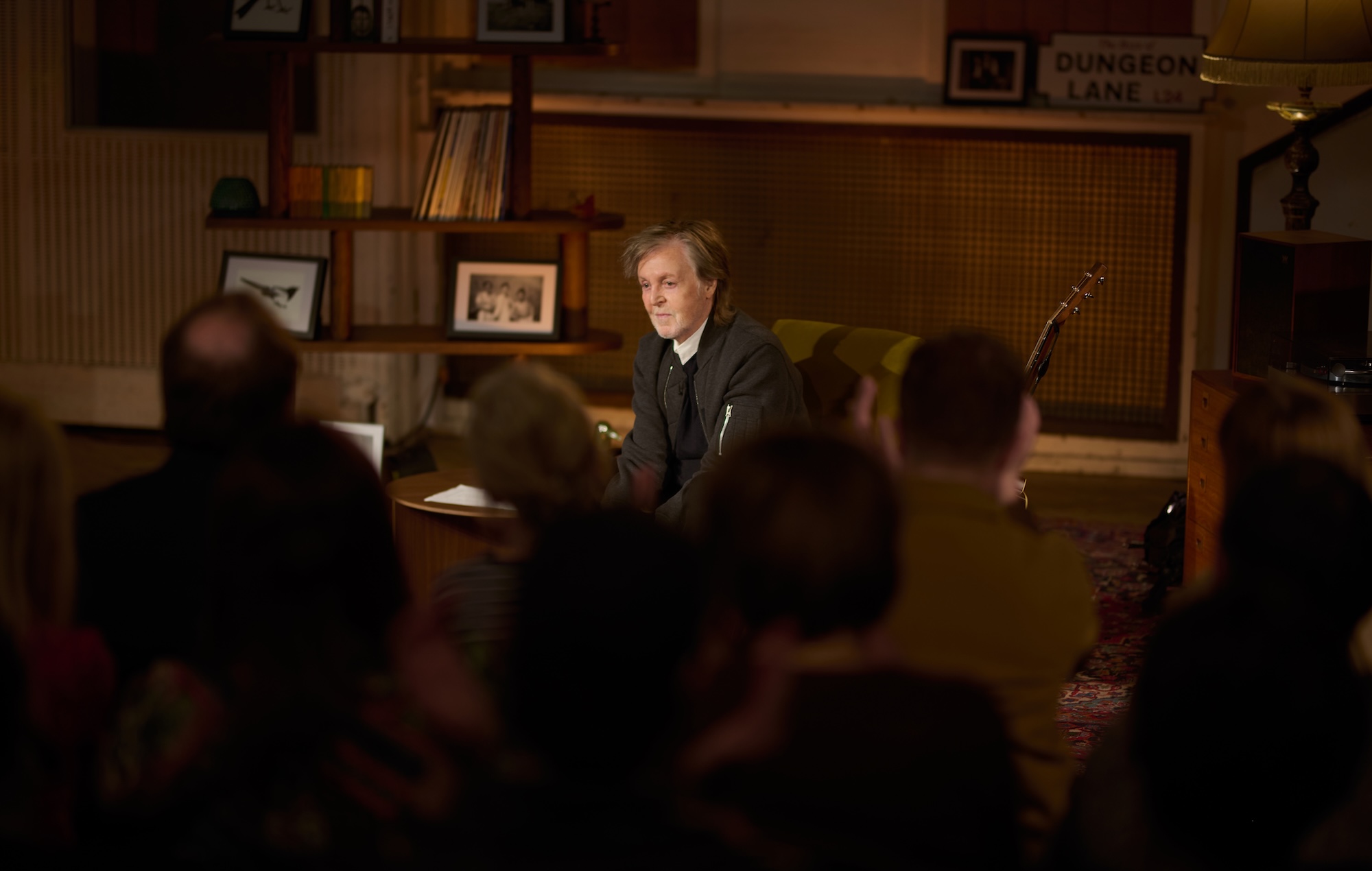
On a damp Tuesday evening at Abbey Road Studios, Paul McCartney shepherded roughly fifty people into Studio Two, locked their phones away and proceeded to turn a listening event into something like a living-room confessional. The space was staged like a patchwork of his past: records leaning against a mic stand, framed photos, loose odds and ends and, oddly, a street sign reading The Boys Of Dungeon Lane. McCartney descended the stairs and sat where anyone might have sat to tell a few stories over tea—except this was a man whose anecdotes can reshape pop history.
He prefaced the playback with a modest promise: “I’m going to play the new album for you and try and think of stuff to say about it.” Ninety minutes later that self-effacing note had softened into something more deliberate. The record, he said repeatedly, contains “quite a few” songs that reach back—and not lightly. McCartney’s late-career habit of mining memory isn’t new, but here it felt more specific, less myth-making and more about granular, domestic detail: a milk-float burn, hitchhiking with George, the dirt and small loyalties of Liverpool streets.
The anecdotes often doubled as keys to the songs. Down South, an acoustic-led vignette, came with a story about hitchhiking with George Harrison. McCartney mimicked his own Liverpool cadence, nudged into self-parody, then landed on a small, revealing punchline: Harrison sitting on a milk-float battery, getting burned by his jeans zip. “Memories are a weird thing,” McCartney said later, acknowledging how stories pass, are confirmed or contested—Olivia Harrison apparently remembered the burn too. The moment illustrated the album’s posture: affection policed by the slipperiness of recollection.
That slipperiness is explicit in the music. The first single, Days We Left Behind, gestures toward John Lennon in a way that still upsets him—McCartney admitted he gets “emotional talking about” Lennon—and you can hear the mixture of tenderness and small ache in the arrangement. Home To Us leans into the working-class sketching of Liverpool where McCartney, Harrison and Ringo Starr were raised; its conversational chorus allows Starr to trade lines with McCartney, the pair slipping into a frayed, affectionate duet.
The backstory to that duet was telling in itself. McCartney described a brief production mystery: Ringo had recorded a drum track in Andrew Watt’s Los Angeles studio and felt a bit “miffed” when he didn’t hear it in anything. Watt, who produced the album between LA and East Sussex, played the recording back to McCartney, who thought it sounded “very Ringo.” McCartney finished the piece, sent it back, and Ringo returned vocals for the chorus—initially only the chorus—prompting McCartney to joke that he thought Ringo “must hate it.” After a phone call, they landed on a give-and-take that McCartney framed as the first “Paul-Ringo duet,” which is both a marketing-friendly line and a genuine, tender assertion about two survivors of a strange century.
Other tracks aim at different registers of memory and mood. Salesman Saint is the first song McCartney says he’s written about his parents, a small elegy to endurance. Mountaintop borrows a “hippy mood” and the festival’s mythos to make something pastoral and wide; Ripples In A Pond is directed at Nancy, his wife, a simple, warmly arranged love song. During the playback McCartney mouthed lyrics, played air guitar, banged an invisible drum and occasionally picked up an acoustic to demonstrate a figure. When he hit a bum note while showing the riff from Life Can Be Hard, he laughed and said, “I haven’t been practising. You’d think if you knew you were doing this, then you’d have practised. But I don’t care!” It was small and humanizing, the sort of moment that undercuts any museumification of him.
The production feels modern enough to sit on contemporary playlists yet patient—Watt’s fingerprints are there, in the sheen and occasional loudness, but the arrangements leave room for McCartney’s storytelling voice. This balancing act is important: the album resists the temptation to be a nostalgia act for nostalgia’s sake. Instead it reads as an elder artist curating the stories he wants to be true, aware that memory can be both a resource and a form of artifice.
Staging the event inside Studio Two matters. Abbey Road is not only a workplace; it is a shrine. McCartney leaning into that atmosphere—telling Liverpool stories inside the very room where the songs that made those stories famous were shaped—felt intentionally circular. It’s a reminder that legacy artists now manage their pasts as much as they make new music: small, controlled gatherings, a dinner-table tone, the odd headline-grabbing collaborator, and then the record itself, which will have to carry the weight of the anecdotes.
The album is due May 29. Hours after the listening, a press note landed that McCartney will appear on the Rolling Stones’ upcoming record Foreign Tongues, following his cameo on Hackney Diamonds. It’s a trivial-seeming addendum to an evening otherwise built around intimacy, but it also points to the way McCartney’s late career continues to oscillate between quiet self-mythologizing and conspicuous, cross-generational gestures.
What the Abbey Road event made clear is that The Boys Of Dungeon Lane is less about rewriting the past than about selecting which parts of it to set in amber. There are burns, jokes, household affection and real tenderness for friendships that persist despite time. Whether that selection amounts to art or memory-work will be for listeners to decide. But for one night in Studio Two, Paul McCartney made the case that old stories, told by someone who can still write a hook, have their own kind of authority—even if the details keep sliding around.