Physical Address
304 North Cardinal St.
Dorchester Center, MA 02124
Physical Address
304 North Cardinal St.
Dorchester Center, MA 02124
Tucker Wetmore, 26, won the ACM New Male Artist of the Year after Thomas Rhett announced the result during Wetmore’s London show. His rise mixes TikTok virality, two songs on the Twisters soundtrack, a 2025 debut album What Not To, and heavy touring ties.
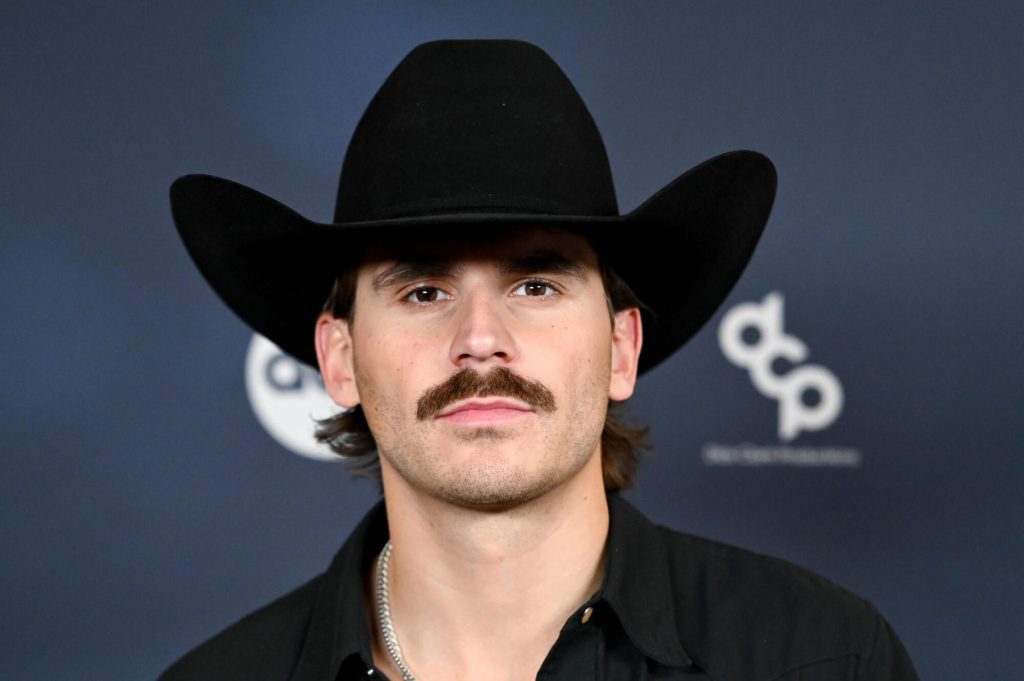
When Thomas Rhett’s face lit up two video screens in a London theater on April 30, the moment felt exactly like the career Tucker Wetmore has been building: a flash of mainstream validation arriving in the middle of a show. Wetmore, 26 and originally from Washington state, stood onstage as his mother, Sia, called the audience’s attention to the announcement — Rhett, who Wetmore opened for last summer, telling the room that the Academy of Country Music had named him New Male Artist of the Year.
The unveiling was simple and strange, public and private at once. Wetmore wiped at his eyes and told the crowd, “I’m at a loss for words right now for the first time in a long time… I can’t do any of this without you guys. I can’t do any of this without that woman right there.” It read less like a trophy speech than the relieved exhale of someone who has been sprinting to keep up with momentum.
That momentum has been fast and oddly 21st century. A clip he posted on TikTok in December 2023 of “Wine Into Whiskey” turned into a chorus people used to soundtrack breakups; the single crawled onto the Hot 100 in March 2024 and peaked in the high 60s. The next year he translated that attention into more traditional industry markers: two songs on the Twisters soundtrack, a top-five showing on Top Country Albums for his debut full-length, and three top-three Country Airplay hits from his record What Not To.
There are classic and contemporary contradictions in his story. Wetmore taught himself piano at 11 after falling for Jerry Lee Lewis — a reference point that explains the priority he gives to piano in a radio country landscape that often favors guitar-driven production. Yet his initial exposure was bred on TikTok virality and soundtrack placement: a musician fluent in both muscle-memory boogie and the attention-economy work of hooks and clips.
The Twisters placement in 2024 mattered more than the credit line. Having two appearances on a soundtrack that climbed to No. 3 on Top Country Albums and No. 7 on the Billboard 200 put Wetmore in front of listeners who might never scroll past a TikTok. One of the cuts was his solo “Already Had It” and the other found him featured on Conner Smith’s “Steal My Thunder.” These were signal-boost moments that helped carry his 2025 debut, What Not To, to No. 4 on Top Country Albums and No. 15 on the Billboard 200.
There’s a precedent for this award marking a long arc. Seven past winners of ACM New Male Artist of the Year eventually won Entertainer of the Year: Merle Haggard (the inaugural winner), Mickey Gilley, Kenny Chesney, Luke Bryan, Jason Aldean, Keith Urban and Chris Stapleton. Those are heavy footsteps. But for every Kenny Chesney there’s the quieter truth that the music business is no guarantee: radio, streaming playlists, touring clout and timing still decide whether a newcomer consolidates into superstardom.
Wetmore’s touring résumé is already robust for someone who only recently crossed from viral curiosity into mainstream charts. He’s opened for Thomas Rhett, Jason Aldean, Luke Bryan and Jordan Davis. This summer he’s booked for select dates with Jordan Davis, HARDY and Brooks & Dunn and is also headlining his own Brunette World Tour, named after his most visible single. Live rooms — both as opener and headliner — are where country acts still earn the long-term loyalty that translates to arena runs.
Musically, Wetmore sits somewhere between polished country radio and a rootsy piano-player who grew up on rockabilly theatrics. Tracks like “Wind Up Missin’ You,” “3,2,1” and “Brunette” fit neatly into Country Airplay formulas; they are meticulously produced, chorus-forward songs that radio programmers can program into rotation. At the same time, his piano parts and the way he phrases a line betray an older, more physical approach to performance. It gives his set a slightly retro spine, which is useful in a field where sonic differentiation matters.
Recognition is arriving across industry markers. Wetmore is also up for breakthrough country artist and best country album at the American Music Awards, competing against peers such as Sam Barber and Zach Top, and against albums that include Barber’s Restless Mind, Megan Moroney’s Cloud 9 and Morgan Wallen’s I’m the Problem. Those nominations are reminders that Wetmore’s moment is partly defined by a crowded field — not just of talent, but of artists who have learned to move between streaming, radio and festival circuits.
What feels worth watching now is how he balances the mechanics of modern country stardom with the parts of his identity that make him distinct. The ACM win is a box checked, but the real test is translating soundtrack placements, viral moments and radio singles into a durable brand: a touring engine that grows beyond arena support slots, a songwriting voice with recurring themes, and records that listeners return to when playlists rotate.
He has the architecture to try. At 26, Wetmore has stacked radio hits, a soundtrack placement that put him on broader charts, major-opening slots and now an ACM trophy. The industry will likely press him into faster cycles of releases and headline dates; whether that accelerates his voice or dilutes it will determine if he follows in the footsteps of those New Male Artist winners who became Entertainer of the Year — or if his trajectory takes a different turn entirely.